
close
Choose Your Site
Global
Social Media


In cryogenic storage, insulation acts as much more than a simple operational feature. It serves as your primary defense against catastrophic product loss, structural fatigue, and severe safety hazards. Facilities cannot afford compromises here. Maintaining gases like Liquid Natural Gas (LNG), liquid nitrogen, or liquid oxygen in a stable fluid state requires extreme precision. Operators must continuously mitigate conductive, convective, and radiant heat transfer. Even a minor thermal leak quickly destabilizes the stored medium.
We designed this guide to help procurement and engineering teams confidently select the right containment solutions. You will learn an objective framework for evaluating various insulation methods. We will compare thermal efficiency, material longevity, and specific application requirements. By understanding these thermal dynamics, you can optimize facility performance and protect your most valuable liquid assets over the long haul.
Insulation failure directly translates to increased Boil-Off Gas (BOG) rates, leading to continuous revenue loss and potential overpressurization risks.
Vacuum-jacketed systems with Multi-Layer Insulation (MLI) offer superior thermal performance for precision applications, while bulk perlite remains viable for large-scale, stationary storage.
Evaluating a cryogenic tank requires balancing footprint constraints, thermal conductivity (K-value), and the long-term maintenance demands of the vacuum annulus.
Shortlisting vendors must involve strict verification of code compliance (ASME, API) and their approach to minimizing thermal bridges in piping and support structures.
Every Cryogenic Tank relies heavily on its thermal barrier. When organizations cut corners on insulation, they invite cascading financial and operational penalties. You must view thermal protection as an active risk management tool.
Heat ingress creates a direct financial drain. Cryogenic liquids exist at temperatures far below ambient conditions. When ambient heat penetrates the vessel, the liquid absorbs this energy. Every fraction of a degree of heat ingress converts valuable liquid product back into gas. The industry refers to this as Boil-Off Gas (BOG).
High BOG rates force facilities into difficult choices. They must either invest in highly energy-intensive reliquefaction systems or vent the gas entirely. Venting literally sends profits into the atmosphere. For high-value commodities like liquid helium or argon, even a 1% daily boil-off rate destroys profit margins rapidly. Superior insulation minimizes this passive heat leak. It preserves your inventory and maximizes your yield.
Insulation degradation introduces severe safety hazards. Poor thermal retention accelerates pressure buildup inside the inner vessel. As the liquid rapidly boils into gas, it expands exponentially. This expansion places immense stress on the entire system.
To prevent catastrophic failure, safety relief valves must lift and vent the excess pressure. However, frequently lifting these valves creates mechanical wear. A failing relief valve combined with high BOG creates an imminent rupture risk. You protect your site personnel and your physical infrastructure by maintaining strict thermal boundaries. Effective insulation keeps internal pressures stable and predictable.
Cheap upfront insulation choices lead to expensive consequences. Budget materials often suffer from accelerated structural degradation. Granular materials can crush themselves. Vacuum seals may outgas prematurely. These issues slash the effective lifespan of your storage assets.
When insulation fails, you face extended maintenance downtime. Repairing a compromised vacuum annulus requires emptying the tank entirely. The facility must purge the system, warm it to ambient temperature, and conduct extensive leak detection. This process halts operations for weeks. Investing in robust, high-performance insulation extends the asset lifecycle. It keeps your facility running without unexpected interruptions.
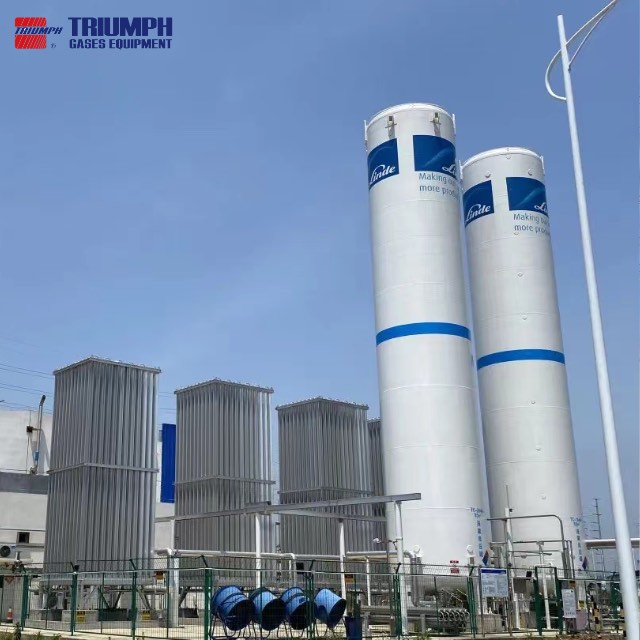
Engineers have developed multiple methodologies to restrict heat flow. Each technology targets specific mechanisms of thermal transfer: conduction, convection, and radiation. The right choice depends on your physical footprint, your target cryogen, and your facility scale.
MLI stands as the absolute pinnacle of thermal protection. Manufacturers design this system to operate strictly within a high vacuum environment. MLI heavily targets radiant heat transfer.
Mechanism: Engineers wrap the inner vessel in alternating layers. They use highly reflective radiation shields, usually aluminized Mylar. They separate these reflective shields using low-conductivity spacers like fiberglass netting. A typical MLI blanket might contain 40 to 80 layers per inch. The surrounding high vacuum eliminates convective heat transfer. The spacers minimize conductive transfer. The reflective layers bounce radiant heat away.
Best Fit: We recommend MLI for high-value, space-constrained applications. It dominates liquid helium storage, medical liquid nitrogen systems, and mobile transport tanks. When you need maximum performance in a minimal profile, MLI excels.
Trade-offs: MLI commands a premium initial price. Its performance heavily depends on maintaining strict vacuum integrity. If the vacuum degrades, the thermal resistance collapses immediately. Furthermore, MLI is highly complex to manufacture. Repairing a damaged MLI blanket in the field proves exceedingly difficult.
Perlite provides a robust, proven approach for massive industrial applications. It balances acceptable thermal efficiency with structural simplicity.
Mechanism: The system features an inner vessel and an outer jacket. The manufacturer leaves a wide space between them. They fill this annular space with expanded perlite powder. Perlite is a naturally occurring volcanic glass. When heated, it expands into porous, lightweight granules. After filling the space, technicians evacuate the air to create a vacuum. The perlite acts as a physical baffle. It blocks radiant heat and slows remaining gas molecules.
Best Fit: This remains the industry standard for standard industrial storage. It perfectly suits mid-to-large scale stationary cryogenic tanks holding liquid nitrogen, oxygen, or argon.
Trade-offs: Perlite introduces significant weight. It also suffers from mechanical settling. Repeated thermal cycling causes the inner vessel to expand and contract. This movement crushes the perlite granules over time. The material sinks, potentially creating dangerous "hot spots" at the top of the tank. You cannot easily top off perlite without warming the tank.
Some massive installations cannot utilize vacuum jackets. In these scenarios, rigid cellular materials step in.
Mechanism: These rely on non-vacuum, rigid cellular matrices. Manufacturers use materials like cellular glass (Foamglas) or dense polyurethane foams (PUF). These materials trap millions of tiny gas bubbles within a rigid structure. The trapped gas sharply reduces conductive heat transfer.
Best Fit: Facilities use these primarily for massive, flat-bottom LNG storage tanks. These tanks are physically too large to support a vacuum outer jacket. Engineers use cellular glass extensively for load-bearing base insulation under the tank floor. They use PUF for external shell cladding.
Trade-offs: These materials possess a higher thermal conductivity compared to vacuum methods. They require thick application layers. They also demand rigorous vapor barriers. If moisture penetrates the foam, it freezes. This causes "ice jacking," where expanding ice physically tears the insulation apart.
Aerogel represents the cutting edge of non-vacuum thermal protection.
Mechanism: Aerogels are nanoporous synthetic porous ultralight materials. They consist of a gel where engineers replace the liquid component with a gas. This creates a solid with extremely low density and exceptionally low thermal conductivity. Manufacturers embed this aerogel dust into flexible fibrous blankets.
Best Fit: Aerogels excel in retrofitting existing systems. They work beautifully for complex piping geometries or valves. Facilities also use them in hybrid systems where they face strict footprint limits but cannot utilize vacuum jackets.
Trade-offs: Aerogel carries premium pricing. Handling the material requires caution. Cutting aerogel blankets releases fine, irritating silica dust. Installation crews must follow strict safety protocols and wear specific PPE during application.
Selecting the right Cryogenic Tank involves evaluating multiple engineering dimensions. You cannot look at thermal performance in a vacuum. You must weigh it against physical realities.
Thermal Performance vs. Footprint: You must calculate the required K-value (thermal conductivity) against your physical space. MLI requires significantly less thickness than perlite to achieve the same thermal resistance. If your facility has strict spatial constraints, a thinner MLI jacket allows for a larger inner vessel volume. If you have unlimited space, a thicker perlite annulus might prove more economical.
Cryogen Compatibility: You must match the insulation type to the specific boiling point of the stored gas. LNG boils at -162°C. Liquid Hydrogen boils at -253°C. Liquid Helium boils at -269°C. Colder gases dictate stricter vacuum requirements. A perlite system works adequately for LNG. However, Liquid Hydrogen demands high-vacuum MLI to prevent rapid boil-off. You cannot apply a one-size-fits-all approach here.
Mechanical Resilience and Thermal Bridging: Heat always seeks the path of least resistance. Even perfect MLI fails if the manufacturer ignores thermal bridging. You must assess how the vendor isolates the inner vessel supports and piping penetrations. These structural connections link the ultra-cold inner tank directly to the warm outer jacket. They form massive conductive pathways. Look for vendors who utilize specialized low-conductivity materials, like G-10 fiberglass epoxies or lengthened stainless-steel trunnions, to break these thermal bridges.
Insulation Type | Relative K-Value | Thickness Requirement | Primary Application |
|---|---|---|---|
Multi-Layer Insulation (MLI) | Extremely Low | Minimal (1-2 inches) | Liquid Helium, Transport |
Vacuum-Jacketed Perlite | Low | Moderate (6-12 inches) | Industrial Liquid Nitrogen/Oxygen |
Aerogel Blankets | Low to Moderate | Minimal to Moderate | Piping, Complex Geometries |
Polyurethane Foam (PUF) | Moderate | High (12+ inches) | Flat-Bottom LNG Tanks |
The best insulation system on paper means nothing if it fails in the field. You must plan for the physical realities of operating ultra-low temperature equipment.
You must address the reality of vacuum outgassing. Over years of service, the metal walls of the vacuum annulus slowly release trapped gas molecules. This outgassing steadily degrades the vacuum level. As pressure rises, convective heat transfer returns. Thermal performance drops.
To combat this, manufacturers install chemical getters inside the annulus. These absorbents, typically palladium oxide or specialized zeolites, actively scavenge stray gas molecules. However, getters eventually saturate. You must mandate built-in vacuum telemetry. Demand high-quality thermocouple gauges on the outer jacket. These allow your maintenance team to monitor vacuum health dynamically without breaking any seals.
Best Practice: Log vacuum gauge readings monthly. Plotting this data helps you predict exactly when a system will require vacuum re-pumping.
Facilities rarely keep tanks at a constant level. Repeated filling and emptying cycles create severe thermal stress. When you fill the tank, the inner vessel shrinks. When it empties, it warms and expands. This continuous expansion and contraction causes metal fatigue.
More importantly, it aggressively fatigues insulation materials. We previously discussed how perlite crushes under this movement. MLI blankets can also shift or tear if engineers fail to secure them properly during manufacturing. You must ask vendors how their internal support structures accommodate this specific thermal contraction without tearing the insulation.
Do not accept verbal assurances regarding insulation integrity. Outline mandatory, documented checks required post-installation. Rigorous testing separates reliable manufacturers from risky ones.
Helium Leak Testing: The vendor must perform mass spectrometer helium leak testing on all vacuum seals. Helium atoms are incredibly small. If a weld can hold helium gas under pressure, it will maintain a high vacuum.
Cold Shock Testing: The manufacturer must subject the inner vessel to liquid nitrogen temperatures before final sealing. This cold shock exposes microscopic weld flaws. If a weld cracks under thermal contraction, they can repair it before sealing the vacuum jacket.
Common Mistake: Skipping cold shock testing to accelerate delivery times frequently results in catastrophic vacuum loss during the first operational fill.
Procuring a Cryogenic Tank requires strict vendor vetting. You must control the narrative during the bidding process. Use these specific steps to filter your supplier list.
Never ask a vendor, "What is your boil-off rate?" Instead, mandate your own acceptable limits. Buyers must define strict BOG thresholds before speaking to sales engineers. State clearly: "We require a guaranteed BOG rate below 0.5% per day for Liquid Nitrogen." Use this figure as a rigid baseline. Vendors must engineer their insulation thickness and vacuum levels to meet your exact specification.
Avoid suppliers who only offer off-the-shelf estimates. Look for engineering partners who provide custom thermal modeling. A competent vendor should offer finite element analysis (FEA) of their vessel designs. They should clearly map out anticipated heat leaks around piping penetrations. Assess their specific track record with your chosen cryogen. Engineering a tank for liquid oxygen differs vastly from engineering one for liquid hydrogen.
Regulatory compliance is non-negotiable. Ensure the system meets strict regional and international codes for pressure vessels. Look for adherence to ASME Section VIII (Boiler and Pressure Vessel Code). In Europe, verify EN 13458 compliance. For large-scale flat bottom tanks, mandate API 620 standards. These certifications ensure the manufacturer utilized approved welding techniques and materials.
Once you narrow your list, ask the remaining vendors for a detailed lifecycle maintenance schedule. You need to know their expected timelines for vacuum degradation. Ask them explicitly how many years their getter packets typically last before requiring a vacuum re-pump. Factor these predictable maintenance downtime windows into your final decision.
Specifying a cryogenic vessel is fundamentally an exercise in thermodynamics and proactive risk management. You cannot control ambient temperatures, but you can control how your equipment resists them.
Select insulation based strictly on your cryogen type and footprint constraints.
Prioritize systems utilizing robust thermal bridge isolation and high-quality vacuum telemetry.
Demand strict adherence to mass spectrometer testing and ASME/API code compliance before accepting delivery.
Plan your maintenance cycles around predictable vacuum degradation timelines rather than waiting for failure.
The right insulation technology protects your product yield. It secures your facility's safety record. It ensures your operations remain profitable and predictable.
Do not leave your thermal management to chance. Contact our engineering team today for a site-specific evaluation of your current containment needs. We can assist with custom thermal modeling, greenfield system specifications, or advanced tank retrofitting requirements.
A: Maintenance timelines vary based on initial manufacturing quality and operating conditions. Typically, a high-quality double-wall tank maintains effective vacuum for 10 to 15 years. Premium tanks with advanced getter materials might last 20 years. You should monitor your thermocouple gauges regularly; a steady pressure rise indicates it is time to schedule a re-pumping service.
A: No. Adding or replacing perlite requires breaking the vacuum seal. For safety and structural integrity, you must completely drain the tank, purge all cryogenic gases, and warm the inner vessel to ambient temperature. Attempting to top off perlite on a cold, active tank presents severe safety hazards and risks catastrophic vacuum failure.
A: Static boil-off refers to the passive heat leak when the tank sits idle. It represents pure insulation efficiency. Dynamic boil-off includes the heat introduced during active operations. This includes heat from transferring liquids, warm piping, and operating pumps. Vendors usually quote static BOG; you must account for dynamic BOG in your facility planning.
A: Visible external frosting or intense sweating on the outer jacket provides the most obvious sign. You might also notice sudden, unexplained pressure spikes inside the inner vessel. Operationally, a sharp increase in your daily boil-off rate or a reading loss on your vacuum thermocouple gauge strongly indicates a compromised thermal barrier.


