
close
Choose Your Site
Global
Social Media


The global gas industry is undergoing a profound transformation. Driven by energy transition policies, industrial upgrading, hydrogen development, and LNG trade expansion, gas projects are becoming larger in scale, more technically complex, and more sensitive to cost, schedule, and safety performance. In this environment, project owners are increasingly asking a critical question: how can gas projects be delivered faster, safer, and with greater cost certainty?
The answer, for many leading investors and operators, lies in adopting an EPC turnkey project service model.
This article provides an in-depth, data-driven analysis of the key benefits of choosing an EPC turnkey project service for the gas industry. It integrates the latest industry trends and aligns them with real-world user search intent, focusing on Gas Project Management, One-Stop EPC Services, and Gas Engineering Contracts. Through comparisons, lists, and tables, this guide explains why the EPC turnkey project service model has become a strategic cornerstone of modern gas project development.
An EPC turnkey project service is a comprehensive project delivery model in which a single contractor assumes full responsibility for Engineering, Procurement, and Construction, delivering a complete, ready-to-operate gas facility. Once the project is completed, the owner can simply “turn the key” and begin operations.
In the gas industry—where projects involve high-pressure systems, cryogenic equipment, strict safety standards, and advanced control systems—the integrated nature of an EPC turnkey project service provides unmatched advantages. Instead of coordinating multiple contractors under fragmented Gas Engineering Contracts, owners benefit from centralized accountability and streamlined execution.
Traditional gas project delivery models often rely on multiple contracts and dispersed responsibilities. While this approach may appear flexible, it introduces significant risks in coordination, scheduling, and cost control.
An EPC turnkey project service addresses these challenges by unifying all project phases under a single contractual and managerial structure. This is especially critical for modern Gas Project Management, where speed, predictability, and compliance are paramount.
Key industry drivers accelerating adoption include:
Increasing project complexity
Stricter environmental and safety regulations
Rising capital investment and financing scrutiny
Shorter time-to-market requirements
Under these conditions, the EPC turnkey project service model has evolved from an option into a necessity.
Effective Gas Project Management is one of the most decisive factors in project success. Delays, cost overruns, and quality issues often stem from poor coordination between engineering, procurement, and construction teams.
An EPC turnkey project service enhances Gas Project Management by:
Establishing a single command structure
Eliminating interface disputes between contractors
Aligning engineering decisions with procurement realities
Integrating construction planning from the design stage
This unified management approach allows risks to be identified and mitigated early, improving overall project outcomes.
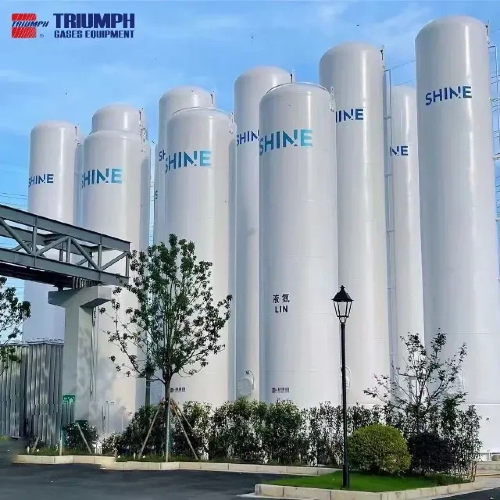
One of the most significant advantages of an EPC turnkey project service is its role as One-Stop EPC Services. Instead of managing multiple vendors, the project owner works with a single EPC contractor responsible for the entire lifecycle.
Front-end and detailed engineering
Equipment manufacturing and global procurement
Civil works and installation
Commissioning and performance testing
Final handover and documentation
For gas projects involving specialized equipment and strict regulatory requirements, One-Stop EPC Services dramatically reduce administrative burden and execution risk.
To clearly illustrate the value of an EPC turnkey project service, consider the comparison below:
| Aspect | Traditional Gas Engineering Contracts | EPC turnkey project service |
|---|---|---|
| Number of Contracts | Multiple | Single |
| Owner Coordination Effort | High | Low |
| Interface Risk | High | Minimal |
| Cost Predictability | Low | High |
| Schedule Control | Fragmented | Integrated |
| Suitability for Large Gas Projects | Limited | Excellent |
This comparison explains why many owners are moving away from fragmented Gas Engineering Contracts toward the EPC turnkey project service model.
Gas projects often involve large capital investments, making cost control a top priority. One of the strongest advantages of an EPC turnkey project service is improved cost certainty.
Under an EPC turnkey project service, costs are typically agreed upfront, reducing exposure to budget overruns. The EPC contractor assumes responsibility for managing procurement price fluctuations, construction inefficiencies, and coordination risks.
From a financial perspective, this makes EPC turnkey project service particularly attractive for projects requiring external financing, as lenders favor predictable cost structures.
In today’s competitive gas markets, delays can translate directly into lost revenue. An EPC turnkey project service improves schedule reliability by integrating planning across all project phases.
Unlike traditional Gas Engineering Contracts, where delays in one contract can cascade into others, an EPC turnkey project service ensures that engineering, procurement, and construction timelines are aligned from the outset.
This integrated scheduling approach is a key reason why One-Stop EPC Services are increasingly preferred for time-sensitive gas projects.
Industry data supports the growing preference for the EPC turnkey project service model:
Average schedule reductions of 20–30%
Cost overrun reductions of up to 15%
Lower rework rates due to integrated design
Improved safety records through unified HSE systems
These metrics demonstrate how EPC turnkey project service enhances both technical and commercial performance.
Digitalization is reshaping the way gas projects are delivered. Tools such as Building Information Modeling (BIM), digital twins, and intelligent project controls are most effective when applied within an EPC turnkey project service framework.
With centralized data ownership, Gas Project Management teams can leverage real-time insights to optimize designs, monitor construction progress, and improve commissioning efficiency. This level of integration is difficult to achieve under fragmented Gas Engineering Contracts.
Risk management is a defining challenge in the gas industry. Safety incidents, regulatory non-compliance, and technical failures can have severe consequences.
An EPC turnkey project service enhances risk management by:
Centralizing safety accountability
Ensuring consistent quality standards
Reducing design-construction mismatches
Improving regulatory compliance
For owners, this translates into lower operational risk and greater long-term asset reliability.
Sustainability is now a central consideration in gas project development. From emissions reduction to energy efficiency, project owners are under increasing pressure to meet environmental targets.
An EPC turnkey project service allows sustainability to be embedded from the earliest design stages. Through optimized process engineering and equipment selection, One-Stop EPC Services can significantly reduce lifecycle environmental impact.
This capability is especially valuable for gas projects aligned with hydrogen energy and low-carbon transition strategies.
From an investment standpoint, the EPC turnkey project service model offers several strategic advantages:
Higher project bankability
Improved return on investment predictability
Reduced internal management costs
Faster revenue generation
These benefits explain why Gas Project Management strategies increasingly prioritize EPC turnkey project service delivery.
Fragmented project delivery models often struggle with accountability gaps. When multiple contractors operate under separate Gas Engineering Contracts, disputes over responsibility are common.
By contrast, One-Stop EPC Services under an EPC turnkey project service eliminate ambiguity. The EPC contractor is fully accountable for performance, simplifying decision-making and dispute resolution.
Selecting the right EPC turnkey project service provider is critical. Owners should evaluate potential partners based on:
Proven experience in gas projects
Strong engineering and procurement capabilities
Robust project management systems
Compliance with international standards
Financial and organizational stability
Experienced providers of EPC turnkey project service are better equipped to manage complex Gas Project Management challenges.
For companies seeking reliable EPC turnkey project service solutions in the gas industry, professional EPC turnkey project service offerings can be explored through specialized EPC turnkey project service platforms such as those supporting industrial gas and energy infrastructure development.
The benefits of an EPC turnkey project service extend well beyond project completion. Integrated design and construction lead to:
Lower maintenance costs
Improved operational stability
Longer equipment lifespan
Easier future upgrades
For gas facilities with long operational lifecycles, these advantages significantly enhance total project value.
In a rapidly evolving gas industry, the ability to deliver projects efficiently is a competitive differentiator. Companies that adopt an EPC turnkey project service approach gain faster market entry, stronger cost control, and higher operational reliability.
As Gas Project Management requirements grow more demanding, the strategic importance of One-Stop EPC Services and integrated Gas Engineering Contracts will continue to rise.
What is an EPC turnkey project service?
An EPC turnkey project service is a project delivery model where one contractor is responsible for engineering, procurement, construction, and commissioning, delivering a fully operational gas facility.
Why is EPC turnkey project service important for Gas Project Management?
The EPC turnkey project service centralizes responsibility, reduces coordination risks, and improves schedule and cost control, making Gas Project Management more efficient.
How do One-Stop EPC Services benefit gas project owners?
One-Stop EPC Services simplify project execution by providing a single point of contact, reducing administrative burden, and improving accountability.
How does EPC turnkey project service compare with traditional Gas Engineering Contracts?
Compared with fragmented Gas Engineering Contracts, an EPC turnkey project service offers better cost certainty, lower risk, and stronger schedule control.
Is EPC turnkey project service suitable for international gas projects?
Yes. The standardized structure of an EPC turnkey project service makes it ideal for cross-border projects requiring consistent quality and compliance.
In conclusion, the EPC turnkey project service model has become a cornerstone of successful gas industry development. By enhancing Gas Project Management, enabling One-Stop EPC Services, and outperforming traditional Gas Engineering Contracts, this integrated approach delivers measurable advantages in cost, schedule, safety, and long-term performance. For gas project owners seeking confidence and competitiveness in a challenging global market, choosing an EPC turnkey project service is no longer just a benefit—it is a strategic imperative.


