
close
Choose Your Site
Global
Social Media


The global gas industry is undergoing profound transformation. Industrial gas demand continues to rise, LNG and hydrogen infrastructure are expanding rapidly, and gas projects are increasingly crossing borders. At the same time, safety regulations, environmental standards, and investment pressures are becoming stricter than ever. Against this backdrop, global gas companies are rethinking how projects are delivered—and many are reaching the same conclusion: EPC turnkey project service is no longer optional, but essential.
From multinational industrial gas producers to regional energy operators, companies operating in international markets consistently favor EPC turnkey project service models to manage complexity, reduce risk, and achieve predictable results. This article focuses tightly on the core question in the title: Why do global gas companies prefer EPC turnkey project services?
Rather than overextending into unrelated areas, the discussion centers on real execution needs, cross-border challenges, and decision-making logic, closely aligned with user search intent. Along the way, we examine the role of Global Gas EPC, International EPC Standards, and Gas Industry Turnkey Solutions, using structured comparisons, data analysis, and industry context to provide depth and clarity.
Gas projects today are rarely local or simple. Many involve international investment, cross-border supply chains, and compliance with multiple regulatory systems. Typical global gas developments include industrial gas plants, LNG receiving and vaporization stations, fuel gas systems, and hydrogen energy facilities.
These projects share several characteristics:
High capital expenditure
Long project cycles
Strict safety and environmental requirements
Complex equipment and process integration
In such an environment, project delivery method directly affects financial performance, operational reliability, and corporate reputation. This is why global gas companies increasingly rely on EPC turnkey project service to ensure consistency and control.
An EPC turnkey project service is a project delivery model in which a single contractor is responsible for engineering, procurement, construction, installation, and commissioning. The project owner receives a complete, operational facility—ready to run.
For global gas companies, this model offers a clear advantage: one accountable party manages the entire project lifecycle. In Global Gas EPC projects, where coordination across countries, cultures, and standards is required, this simplicity is invaluable.
Traditional project delivery often divides responsibilities among multiple contractors—engineering firms, equipment suppliers, construction companies, and commissioning teams. While this approach may work for small or domestic projects, it creates serious challenges in international gas developments.
Common problems include:
Interface disputes between contractors
Misalignment between engineering and construction
Inconsistent quality standards
Delays caused by procurement coordination
Difficulty enforcing accountability
Global gas companies have learned—often through costly experience—that fragmented models increase risk. EPC turnkey project service offers a proven alternative.
In Global Gas EPC projects, centralized accountability is not a convenience; it is a necessity. When projects span continents, time zones, and regulatory systems, decision-making must be fast and clear.
An EPC turnkey project service provides:
One contract instead of many
One execution schedule
One quality and safety system
One point of responsibility
This structure dramatically reduces management burden for global gas companies and allows them to focus on strategic oversight rather than daily coordination.
One of the strongest reasons global gas companies prefer EPC turnkey project service is compliance with International EPC Standards.
Gas projects must often meet:
ASME, EN, or ISO standards
Local pressure vessel regulations
International safety and environmental codes
Client-specific engineering requirements
Coordinating compliance across multiple contractors is extremely difficult. In contrast, an experienced EPC contractor integrates International EPC Standards into engineering, procurement, and construction from the outset.
This integrated compliance approach reduces approval delays, minimizes rework, and ensures smoother project acceptance.
Cross-border execution introduces risks that go beyond engineering. Logistics, customs, local labor regulations, and language barriers can all disrupt project progress.
Under an EPC turnkey project service, the EPC contractor manages these challenges within a unified execution framework. This is particularly valuable for Gas Industry Turnkey Solutions deployed in emerging markets or remote regions.
Global gas companies prefer this approach because it transforms uncertainty into managed processes.
Industry data and project benchmarking consistently show better performance under EPC models. A simplified comparison is shown below:
| Project Factor | Multi-Contract Model | EPC turnkey project service |
|---|---|---|
| Contract Interfaces | Many | One |
| Compliance Control | Fragmented | Centralized |
| Schedule Predictability | Low | High |
| Cost Control | Uncertain | More Predictable |
| Suitability for Global Gas EPC | Weak | Strong |
This data-driven comparison highlights why EPC turnkey project service has become the preferred choice for global gas companies.
Risk reduction is a core motivation behind EPC preference. Gas projects involve safety-critical systems, and failures can have severe financial and reputational consequences.
Gas Industry Turnkey Solutions delivered through an EPC turnkey project service reduce risk by:
Embedding safety into engineering design
Standardizing construction practices
Applying unified quality control systems
Ensuring consistent commissioning procedures
Global gas companies view this risk reduction as a strategic advantage rather than an operational detail.
While EPC projects are not always the cheapest on paper, they offer superior cost predictability—an attribute highly valued by global gas investors.
With an EPC turnkey project service:
Scope is clearly defined
Change management is structured
Cost exposure is reduced
For companies managing portfolios of international gas assets, predictable capital expenditure is often more important than minimizing initial cost.
Time-to-market matters. Delays in gas projects can affect supply contracts, downstream operations, and revenue forecasts.
Global gas companies favor EPC turnkey project service because integrated scheduling reduces:
Idle time between phases
Procurement-driven delays
Construction stoppages due to design issues
In competitive global markets, schedule reliability translates directly into commercial advantage.
Large gas companies often execute similar projects in multiple countries. They value delivery models that are repeatable and scalable.
An EPC turnkey project service enables:
Standardized engineering concepts
Replicable equipment configurations
Consistent project management processes
This consistency is difficult to achieve with fragmented contractors and is a key reason EPC is favored in Global Gas EPC strategies.
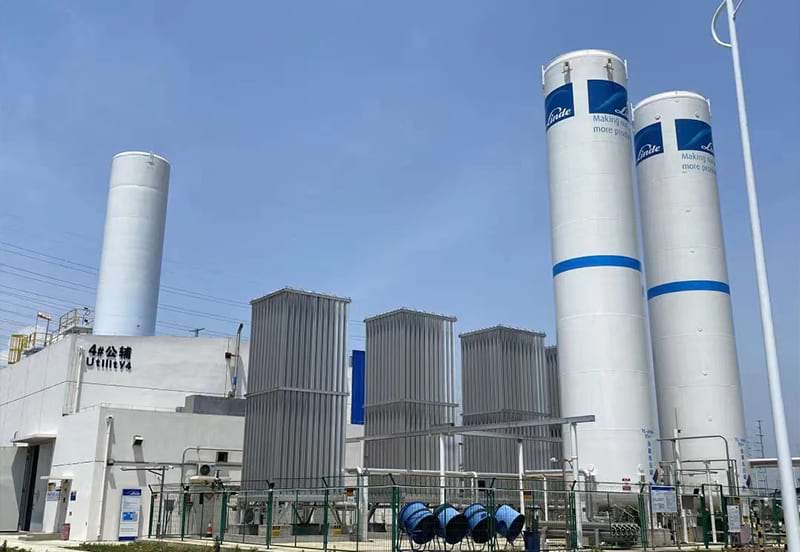
Digital engineering tools, BIM, and data-driven project controls are increasingly important in gas projects. However, these tools are most effective when used within an integrated delivery model.
An EPC turnkey project service allows digital data to flow seamlessly from design to construction to commissioning, supporting higher-quality Gas Industry Turnkey Solutions and better lifecycle management.
Not all EPC contractors are equal. Global gas companies tend to favor EPC providers with deep gas-industry backgrounds and proven international experience.
These providers understand:
Gas-specific process risks
Equipment behavior under different operating conditions
International logistics and compliance challenges
Such experience enhances the reliability of EPC turnkey project service delivery on a global scale.
In the global gas market, some companies have built their EPC capability on decades of gas equipment expertise. One example is TRIUMPH.
Founded in 2004 and headquartered in Wuxi, China, TRIUMPH is a National High-Tech Enterprise and was recognized as a “National Specialized Little Giant” in 2023. The company has participated in the compilation of multiple national standards for gas equipment and holds 117 national patents.
TRIUMPH focuses on the research, development, production, sales, and service of storage, vaporizing, and related equipment for industrial gas, fuel gas, and hydrogen energy industries, and provides comprehensive EPC turnkey project service solutions.
With annual revenue exceeding 350 million yuan, a team of approximately 300 professionals—including senior designers with over 30 years of experience—and annual deliveries of up to 6,000 units or sets, TRIUMPH supports global customers across more than 80 countries and regions. This kind of integrated capability reflects why experienced EPC providers are trusted in international gas projects.
Global gas companies often evaluate structured EPC turnkey project service offerings to assess execution capability and scope integration.
A representative reference for professional EPC turnkey project service solutions in gas and energy infrastructure can be found through EPC turnkey project service, which demonstrates how EPC frameworks are applied to complex gas projects.
For global gas companies, the benefits of EPC turnkey project service extend beyond construction:
Simplified asset handover
Clear documentation for operation and maintenance
Easier future expansion or upgrades
These long-term advantages reinforce EPC as a strategic choice rather than a tactical one.
What is EPC turnkey project service?
An EPC turnkey project service is a project delivery model where one contractor is responsible for engineering, procurement, construction, and commissioning, delivering a complete and operational gas facility.
Why do global gas companies prefer EPC turnkey project service?
Global gas companies prefer EPC turnkey project service because it centralizes responsibility, improves compliance with International EPC Standards, reduces risk, and enhances cost and schedule predictability.
How does EPC support Global Gas EPC projects?
In Global Gas EPC projects, EPC simplifies cross-border execution by integrating engineering, procurement, construction, logistics, and compliance under one management structure.
What role do Gas Industry Turnkey Solutions play?
Gas Industry Turnkey Solutions provide end-to-end delivery for complex gas facilities, reducing coordination complexity and improving execution reliability.
Is EPC turnkey project service suitable for international gas projects?
Yes. EPC turnkey project service is particularly suitable for international projects due to its standardized execution model and strong accountability framework.
Global gas companies operate in an environment where complexity, risk, and capital intensity continue to rise. In this context, EPC turnkey project service has emerged as the preferred project delivery model—not by trend, but by necessity.
By supporting Global Gas EPC, ensuring compliance with International EPC Standards, and delivering reliable Gas Industry Turnkey Solutions, EPC turnkey services enable global gas companies to execute projects with confidence, consistency, and control. As international gas markets continue to expand, the preference for EPC turnkey project service is set to grow even stronger.


