
close
Choose Your Site
Global
Social Media


Transitioning from high-pressure gas cylinders to a centralized Vacuum-Insulated Evaporator (VIE) system is a major capital decision for modern healthcare facilities. Reliable oxygen delivery acts as the vital lifeline for critical care wards, operating rooms, and emergency departments. Hospital administrators and facility engineers face a complex balancing act today. They must ensure absolute patient safety and system reliability while navigating strict footprint constraints on hospital grounds. Relying on outdated cylinder infrastructure often creates severe supply chain vulnerabilities, especially during unforeseen patient surges. Facilities can no longer afford the logistical nightmare of manual tank changeovers during peak medical emergencies. This guide delivers an evidence-based, procurement-ready framework to solve these structural challenges. You will learn how to evaluate, size, and deploy a medical-grade Cryogenic Storage Tank system effectively. We will explore advanced engineering standards, safety protocols, and essential site readiness factors to streamline your facility's upgrade. By following these guidelines, your team can build a resilient medical gas network.
Volume Efficiency: Liquid oxygen offers a 1:861 expansion ratio to gaseous oxygen, drastically reducing the physical footprint required for bulk medical gas storage.
Thermal Performance: High-quality insulation (e.g., perlite and high vacuum) is critical to maintaining boil-off rates below 0.45% per day, preventing product loss.
Redundancy is Mandatory: Dual-spring safety valves, backup rupture discs, and manual bypass manifolds are non-negotiable for uninterrupted patient care.
Managing compressed gas cylinders presents significant operational bottlenecks for busy hospitals. Staff must handle frequent changeovers constantly. This routine introduces severe manual handling risks, leading to potential workplace injuries and inevitable interruptions in patient care. Supply chain vulnerabilities also become dangerously obvious during sudden demand surges. Hospitals relying on individual cylinders often find their loading docks overwhelmed during crises. You need a much more robust and scalable solution.
The shift to bulk liquid oxygen provides a massive physics advantage. One liter of liquid oxygen yields exactly 861 liters of gaseous oxygen. This remarkable 1:861 expansion ratio allows high-flow departments, like intensive care units and operating rooms, to draw massive gas volumes effortlessly. You achieve this high capacity while drastically reducing the physical footprint required for storage. A single centralized tank replaces hundreds of individual metal cylinders.
Furthermore, a modern cryogenic tank operates as a completely self-pressurizing closed system. It utilizes ambient heat exchange through specialized external vaporizers to deliver pure gas. A pressure-building coil automatically draws a small amount of liquid, vaporizes it, and feeds it back into the top of the vessel to maintain head pressure. This closed-loop autonomy requires zero external mechanical energy. It ensures a continuous, uninterrupted flow of life-saving oxygen even during catastrophic localized power failures. Facility managers often cite this passive reliability as the primary driver for upgrading their infrastructure.
Procuring the right equipment requires a deep understanding of structural and thermal engineering principles. The core of any reliable system relies on its dual-cylinder construction. The inner tank must use high-grade austenitic stainless steel, typically type 304 or 316L. This specific material maintains extreme structural integrity at ultra-low temperatures, such as -183°C for liquid oxygen. It prevents embrittlement and ensures strict medical-grade purity. Meanwhile, the outer shell requires heavy-duty carbon steel, like Q235-B or equivalent alloys. This robust exterior provides necessary structural integrity, weather resistance, and critical seismic protection.
Thermal performance directly impacts your daily operational efficiency. You must evaluate insulation materials and boil-off management carefully. Traditional designs use pearlite sand combined with a high-vacuum annular space. Advanced systems now incorporate engineered glass microbubbles. This material innovation can further reduce heat leak by up to 35%. Procurement teams must demand guaranteed baseline metrics for the "Boil-off Rate." This crucial metric defines the daily percentage of liquid lost to premature vaporization.
Insulation Type | Material Composition | Typical Boil-Off Rate | Heat Leak Reduction |
|---|---|---|---|
Traditional System | Expanded Pearlite Sand + High Vacuum | ~0.45% per day | Industry baseline standard |
Advanced System | Glass Microbubbles + Ultra-High Vacuum | <0.30% per day | Up to 35% improvement over baseline |
Finally, consider modular piping and vaporizer integration. Favor engineered designs utilizing significantly fewer pipe joints. This strategic approach minimizes external leak risks and simplifies long-term maintenance. You should also assess the performance of ambient finned-tube vaporizers. They ensure highly efficient liquid-to-gas phase conversion using only surrounding air temperatures. Proper fin spacing prevents excessive ice buildup during heavy draw periods.
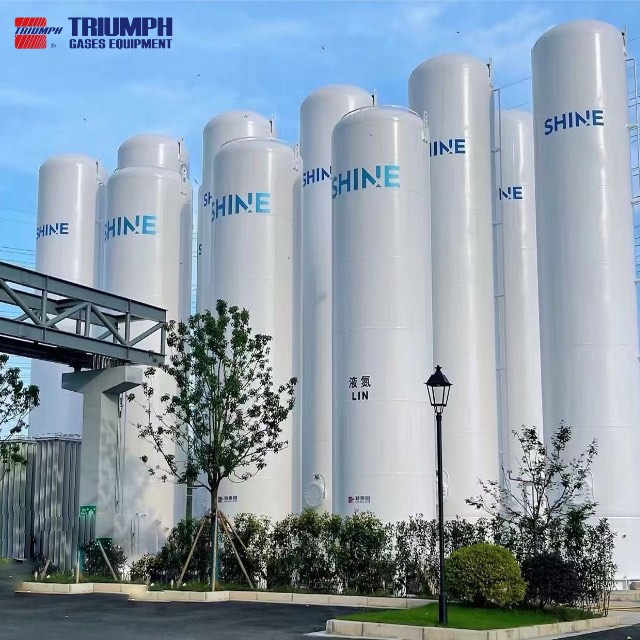
Medical gas distribution systems demand an absolute zero margin for error. Redundant pressure control mechanisms are vital for protecting the equipment and the hospital staff. A compliant system always incorporates dual-relief safety mechanisms to protect against unexpected over-pressurization. You need high-quality dual-spring safety valves paired alongside backup rupture discs. Rupture discs act as a final fail-safe; they burst safely at a predetermined pressure if the mechanical valves fail. Full-port manual diverter valves are equally important. They allow maintenance technicians to seamlessly isolate one safety circuit while the other remains active. This allows for routine component replacement without initiating a full system depressurization or disrupting patient supply.
Navigating complex international certifications ensures your facility remains legally compliant and operationally safe. Your procured equipment must meet strict global engineering benchmarks:
Pressure Vessels: The main body must comply fully with ASME Boiler and Pressure Vessel Codes for guaranteed structural safety.
Design and Build: Construction must align with ISO 21029 and ISO 20421 standards tailored for cryogenic vessels.
Pressure Relief: Safety manifolds should follow ISO 21013 guidelines to guarantee safe gas venting protocols.
Oxygen Cleanliness: Internal components must adhere to ISO 23208 to prevent deadly contamination or spontaneous combustion risks.
Purity and traceability extend far beyond the physical hardware. The entire medical gas supply chain must meet WHO cGMP (Current Good Manufacturing Practice) or PIC/S standards. Your gas supplier should always provide a detailed Certificate of Analysis (COA) for every single delivery. This certified document guarantees the liquid oxygen meets precise medical-grade specifications before it ever reaches vulnerable patients.
Deploying a bulk liquid oxygen system requires meticulous, detail-oriented site planning. Sizing the system accurately prevents dangerous supply shortages and eliminates wasteful excessive capacity. Many hospitals make the common mistake of sizing their system based solely on average historical data.
Follow these core steps to size your infrastructure correctly:
Determine Peak Demand: Calculate the absolute maximum potential flow rate during extreme emergency surges. This peak metric dictates your required ambient vaporizer capacity. Proper sizing prevents the vaporizer from freezing solid during massive volume draws.
Assess Continuous Demand: Evaluate your standard, day-to-day continuous consumption across all wards. This metric determines the total physical storage volume needed for your inner cylinder.
Incorporate a Buffer Zone: Always mandate a minimum 10% unused volume buffer in your initial capacity calculations. This critical buffer protects your oxygen supply during unforeseen weather events or logistics delays.
Civil engineering plays a massive role in successful placement. You must pour highly specialized reinforced concrete foundations capable of supporting immense concentrated vertical loads. A fully loaded vessel weighs tens of thousands of pounds. Safety regulations also mandate strict clearance perimeters. These zones separate hazardous oxidizing materials from public pathways, power lines, and combustible storage areas. Your site design must also guarantee easy accessibility for massive cryogenic tanker trucks. Ensure adequate turning radiuses so drivers can perform seamless, safe refills without blocking ambulance routes.
Modern hospital infrastructure relies heavily on Telemetry and SCADA (Supervisory Control and Data Acquisition) integration. IoT-enabled tracking transforms how you manage critical inventory. These digital systems monitor GPS logistics, exact liquid levels, and automated temperature controls in real-time. They act as a digital watchdog. The software can trigger auto-replenishment protocols with your supplier long before internal volumes reach critical low-levels. This smart connectivity keeps your facility fully prepared, eliminating the stress of manual gauge checking.
Selecting the right manufacturing and logistics partner is just as critical as the hardware specification. You should always prioritize vendors who offer comprehensive end-to-end capabilities. The best industry partners deliver true turn-key solutions. They design and engineer the main storage vessel, ambient vaporizers, vacuum-insulated piping, and complex control manifolds as one unified system. This holistic approach prevents frustrating integration failures. It eliminates the blame-shifting that often occurs between different sub-contractors when a component malfunctions.
A high-performing Cryogenic Storage Tank holds no value without reliable tanker logistics backing it up. You must carefully assess the vendor's regional distribution density. Evaluate their guaranteed emergency response times and total fleet size. A dense regional delivery network guarantees prompt, reliable deliveries, even during severe localized supply chain disruptions or natural disasters. Ask potential partners for their contingency plans during regional power outages.
Finally, consider corporate sustainability and material innovation. Forward-thinking equipment manufacturers now adopt lighter, stronger structural materials. They combine these weight savings with advanced routing telemetry to optimize daily delivery routes. These modern practices significantly reduce the overall carbon footprint associated with medical gas logistics. Partnering with a sustainable, tech-forward vendor aligns your healthcare facility with modern environmental, social, and governance (ESG) goals while securing a life-saving supply chain.
Upgrading to a centralized bulk liquid oxygen system revolutionizes how hospitals manage and deliver critical patient care. Long-term success depends heavily on a strict, uncompromising evaluation framework. You must prioritize absolute sizing accuracy, superior insulation quality, and rigorous regulatory compliance at every step. Pairing these advanced physical assets with a highly reliable, IoT-enabled logistics network ensures your facility never faces a critical medical gas shortage.
Decision-makers should adopt a highly methodical approach to procurement. We advise facility managers to start with a comprehensive site audit. Document your current baseline oxygen consumption and map out potential future expansion needs. You must also factor in historical surge data from recent health emergencies. Completing this thorough internal audit is essential before initiating formal Requests for Proposals (RFPs) with tank manufacturers. Accurate, data-driven planning empowers you to negotiate effectively. It guarantees you will secure an infrastructure system perfectly tailored to your hospital's specific, life-saving operational demands. Take the time to align your engineering team and clinical staff early in the process.
A: The vacuum insulation typically lasts between 5 to 10 years before requiring maintenance. The exact lifespan depends heavily on the quality of adsorbent materials used in the annular space. Routine vacuum readings help identify degradation early, allowing technicians to re-vacuum the chamber and restore optimal thermal performance.
A: A high-quality medical-grade vessel should maintain a boil-off rate below 0.45% per day. Some advanced systems achieve rates closer to 0.30%. This benchmark indicates how much liquid oxygen naturally converts to gas due to ambient heat leak. Lower rates represent better insulation and less product waste.
A: Yes. The core vaporization and pressure-building process utilizes ambient heat exchange, requiring zero external electricity. The system will continue delivering gaseous oxygen seamlessly. However, auxiliary components like telemetry trackers and digital backup alarms do require low-voltage connections or integrated battery backups to remain functional.
A: Peak demand represents the absolute maximum gas flow required during sudden surges. It dictates the physical surface area and size of the vaporizer to prevent it from freezing solid. Continuous demand represents standard daily usage. This metric determines the total volume required for the main liquid storage vessel.


