
close
Choose Your Site
Global
Social Media


Rising raw material costs squeeze food processing margins daily. Inflation continuously drives up operational expenses across the board. Consumers strictly demand fresh, preservative-free quality in every bite. This creates a highly difficult landscape for modern food processors. You must deliver superior products while fiercely protecting your bottom line. Traditional mechanical freezing often fails to meet these modern demands. It cools products far too slowly. This delay causes severe cellular damage and widespread product dehydration. You lose valuable sellable weight through excessive drip loss. Mechanical lines also create frustrating production bottlenecks during peak seasons.
The solution goes far beyond basic cooling infrastructure. Integrating a high-capacity Cryogenic Tank into your facility transforms your freezing process entirely. It acts as a strategic investment. You protect profit margins instantly. You increase output yield significantly. Upgrading your infrastructure ensures strict supply chain compliance. Flash-freezing equipment preserves food texture perfectly. Let us explore how modern cryogenic systems optimize your production floors and elevate your product quality.
Yield Protection over Cooling: Cryogenic freezing drastically minimizes dehydration and drip loss, directly translating to higher sellable weights.
Beyond Simple Freezing: Applications extend into high-value processes like nitrogen dosing for thin-wall packaging, crust-freezing for sticky products, and modified atmosphere packaging (MAP).
CAPEX vs. OPEX Trade-offs: While cryogenic tanks require lower initial capital and up to 60% less floor space than mechanical freezers, they carry higher operational gas costs.
Risk Mitigation: Modern dual-stage systems recover exhaust vapor to boost efficiency by up to 50%, while precise control mitigates product damage like freeze-cracking.
Scientific principles explain why cryogenic freezing outshines traditional methods. Mechanical air freezing operates slowly. It typically delivers a heat transfer coefficient around 17 W/m2/K. Liquid nitrogen zones perform much better. They reach incredible coefficients between 100 and 140 W/m2/K. This massive scientific gap means faster freezing times. It means superior product quality. Decision-makers need clear frameworks to evaluate upgrading freezing lines. We use a straightforward 6-dimension evaluation model to guide these choices.
Evaluation Dimension | Mechanical Freezing | Cryogenic Freezing |
|---|---|---|
Cooling Speed | Slow (takes hours) | Ultra-fast (takes minutes) |
Drip Loss (Yield) | High (up to 20% loss) | Very Low (under 5% loss) |
Facility Footprint | Massive (needs large compressor rooms) | Compact (saves up to 60% floor space) |
Refrigerant Risk | High GWP (Ammonia, HFCs) | Eco-friendly (Natural atmospheric gases) |
Time & Throughput: Flash-freezing accelerates batch turnaround. You eliminate production line congestion entirely. Products move rapidly from preparation to packaging.
Quality & Yield: Rapid temperature drops minimize large ice crystal formation. Experimental benchmarks prove this advantage. Strawberry drip loss hits 20% in mechanical systems. Rapid cryogenic systems reduce this yield loss to under 5%.
Space (Footprint): Traditional setups demand massive mechanical compressors. Cryogenic equipment eliminates these bulky machines completely. You save significant facility floor space for other profitable operations.
Flexibility: Consumer demands change rapidly. Cryogenic tunnels let you seamlessly switch between different product recipes. You run various profiles on the exact same line.
Cost Structure: You enjoy lower initial Capital Expenditure (CAPEX). You must balance this against distinct Operational Expenditure (OPEX) dynamics. Gas consumption requires careful financial planning.
Environmental Compliance: Facilities must reduce their carbon footprint globally. You replace high global-warming-potential (GWP) refrigerants like HFCs or ammonia. You use safe, atmospheric natural gases instead.
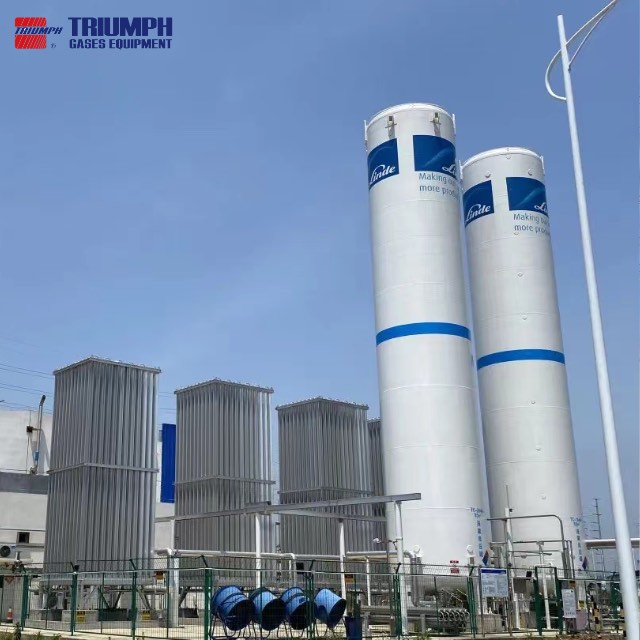
Modern facilities move far beyond basic cooling. They leverage specific, outcome-driven solutions based on material states. A reliable Cryogenic Tank drives these advanced processing applications efficiently. Equipment transforms to meet highly specialized culinary and packaging needs.
Handling sticky or marinated products frustrates line operators constantly. These wet items stick to conveyor belts easily. They leave unsightly belt marks or clump together in massive blocks. Individual Quick Freezing (IQF) solves this physical challenge. Precision crust-freezing exposes the product exterior to ultra-low temperatures instantly. This creates an immediate, hardened external crust. The solid surface prevents sticky foods from adhering together. You preserve the original shape flawlessly. You eliminate visual defects and reduce wasted product scraps.
Modern consumers want fresh products without harsh chemical preservatives. Modified Atmosphere Packaging (MAP) delivers this exact result safely. Food packers use nitrogen or carbon dioxide to displace ambient oxygen inside the packaging. We call this vital process inerting. Removing oxygen stops biological oxidation dead in its tracks. It inhibits mold growth effectively. This scientific approach extends the shelf life for dairy, baked goods, and snack foods. You achieve longer freshness windows naturally.
Beverage manufacturers face unique packaging challenges daily. Companies increasingly use extremely thin-walled aluminum or plastic containers. These frail packages collapse easily during warehouse stacking. Nitrogen dosing provides a niche but high-ROI solution. Operators inject a tiny drop of liquid nitrogen into the container just before sealing. The liquid expands into gas rapidly. This creates firm internal pressure inside the sealed bottle. The outward pressure prevents collapse during vertical stacking. You reduce packaging material costs significantly.
Freezing sauces, purees, or delicate broths requires highly specialized handling. Traditional belts fail here because liquids spread uncontrollably. Facilities utilize super-cooled molded belts for this task instead. Operators pump the semi-liquid material into these freezing plates. The extreme cold solidifies the liquid quickly. It forms uniform, ready-to-use frozen pellets. Quick-service restaurants and consumers love these portion-controlled pellets. They melt evenly and predictably during final meal preparation.
We must acknowledge engineering constraints objectively. Understanding these realities builds operational success. It proves we know the actual challenges facility managers face on the floor. Proper planning prevents expensive operational mistakes.
Operational costs demand honest evaluation from the start. A Cryogenic Tank lowers your upfront equipment costs drastically. However, liquid nitrogen (LIN) or liquid CO2 consumption introduces higher ongoing operational costs. You spend more on gas deliveries compared to standard mechanical electricity costs. High-value food yields usually offset this difference. Retaining product weight pays for the gas. Still, you must budget accurately for continuous gas procurement and delivery logistics.
Ultra-fast freezing sounds perfect, but it carries strict physical risks. High-density, low-porosity foods react poorly to sudden temperature shocks. Butter and certain dense meats serve as prime examples here. The extreme cold causes the outer layers to shrink rapidly. The inner core remains warmer and expands slightly. This uneven temperature gradient causes massive internal stress. Physical cracking occurs if operators fail to manage the cooling curve correctly. Proper programmable controls mitigate this freeze-cracking phenomenon effectively.
Installing these powerful systems requires specific facility upgrades. Safety always dictates the installation process. Facilities need proper ventilation systems to prevent potential oxygen depletion. Workers require rigorous safety training for handling cryogenic gases properly. You must allocate specialized outdoor or well-ventilated indoor footprints. The heavy storage vessel needs proper concrete padding to support its weight safely. Delivery trucks need clear, unobstructed access routes to refill the system regularly.
Industry leaders do not just accept limitations passively. They deploy high-end technical solutions to counter them effectively. Innovative engineering maximizes your thermal efficiency and return on investment. Smart system designs drastically reduce daily operating costs.
Old freezing systems wasted valuable cooling energy constantly. Modern multi-stage systems change this dynamic entirely. They capture the incredibly cold nitrogen vapor generated during the initial immersion phase. The system routes this exhaust vapor forward to secondary spiral freezing zones. It effectively utilizes both sensible and latent heat. Reusing this cold exhaust gas boosts overall thermal efficiency by up to 50%. You extract every possible drop of cooling power from your bulk gas supply.
Many facilities hesitate to replace expensive mechanical freezers entirely. We offer a highly practical engineering compromise. Hybrid retrofitting injects liquid nitrogen as a powerful "boost" into existing production lines. Summer heat often over-stresses mechanical systems severely. Compressors struggle to maintain target temperatures during hot afternoons. A targeted nitrogen injection relieves this burden instantly. You avoid total equipment replacement costs. You maintain peak production speeds during the hottest summer months.
Data drives modern food production and safety compliance. Smart sensors mount directly on the Cryogenic Tank and the processing tunnel line. These connected devices provide real-time parameter tracking continually. Managers monitor gas flow, temperature zones, and exhaust levels constantly from remote dashboards. The predictive software flags maintenance needs before unexpected breakdowns occur. Digital telemetry also ensures food-grade gas traceability. This automated data proves absolutely invaluable during strict food safety compliance audits.
Purchasing the right equipment requires careful organization. Buyers need a logical framework to guide their procurement thoughts. Moving from evaluation to execution requires analyzing three critical pillars. Follow these essential steps to take confident, profitable action.
Never buy a machine without analyzing your food's physical state first. You must match the equipment mechanics to the product perfectly. Wrong equipment choices ruin fragile products instantly. Consider these specialized applications:
Flighted or tumbling systems work best for diced fruits and sticky vegetables.
Smooth plate belts handle semi-fluids and delicate liquid marinades flawlessly.
Wave impingement systems gently separate delicate seafood, keeping raw shrimp perfectly individual.
An undersized bulk vessel halts production unexpectedly. An oversized one wastes precious capital. Determine your ideal capacity based on projected daily gas consumption. Analyze local supplier delivery logistics carefully. If your gas supplier sits three hours away, you need larger on-site storage buffers. Map out your facility layout meticulously. Ensure massive delivery trucks can maneuver near the Cryogenic Tank easily without disrupting normal warehouse traffic.
Do not piece together a complex system from five different vendors. Look for experienced partners who offer comprehensive turnkey solutions. A single contract should combine the tank installation, the freezer tunnel, and the specialized vacuum-jacketed piping. It must also include the ongoing food-grade gas supply agreement. Single-source responsibility eliminates frustrating vendor finger-pointing if operational issues arise later.
Cryogenic technology transitions food freezing from a basic preservation step into a strategic yield-optimization tool. You move past merely cooling food. You actively protect your product weight, visual appearance, and cellular texture. Upgrading your systems provides a massive competitive advantage in crowded grocery aisles.
We openly acknowledge gas costs represent a significant operational factor. However, the tremendous gains in product weight retention typically outpace the OPEX easily. Quality premiums, zero drip loss, and faster production throughput add massive bottom-line value. The initial investment pays dividends through superior product integrity.
Take control of your production profitability today. We strongly encourage you to conduct a detailed "yield loss audit" on your current mechanical freezing lines. Measure exactly how much water weight you lose daily. Consult with a specialized cryogenic engineer to calculate your true potential ROI.
A: The ROI timeline is usually much shorter than traditional mechanical setups. You benefit from significantly lower initial CAPEX. You also gain immediate yield savings by retaining product water weight. Timelines vary based on your daily production volume and local gas pricing, but many facilities see complete returns within 12 to 18 months.
A: Yes, it integrates seamlessly. You can install hybrid "boost" systems that inject cold nitrogen into existing tunnels to assist over-stressed compressors. You can also add crust-freezing pre-treatments at the front of your line. This hardens the product exterior before feeding it directly into your traditional mechanical spirals.
A: Yes, but it alters it positively. Rapid freezing forms tiny micro-crystals rather than large, jagged ice shards. These small crystals protect the fragile cellular walls from tearing. This precise preservation drastically reduces drip loss upon thawing, keeping your food tender, juicy, and visually appealing.


