
close
Choose Your Site
Global
Social Media


Choosing the wrong storage system can increase costs and disrupt operations. But is a liquid nitrogen tank or Dewar better for your needs? Both offer cryogenic storage, but their capacity, pressure, and performance differ. This guide compares their key differences and helps you choose the right solution.
A liquid nitrogen dewar comparison should cover more than container size. Buyers also need to consider pressure, evaporation, insulation, and liquid withdrawal. These factors determine whether equipment can support daily operations.
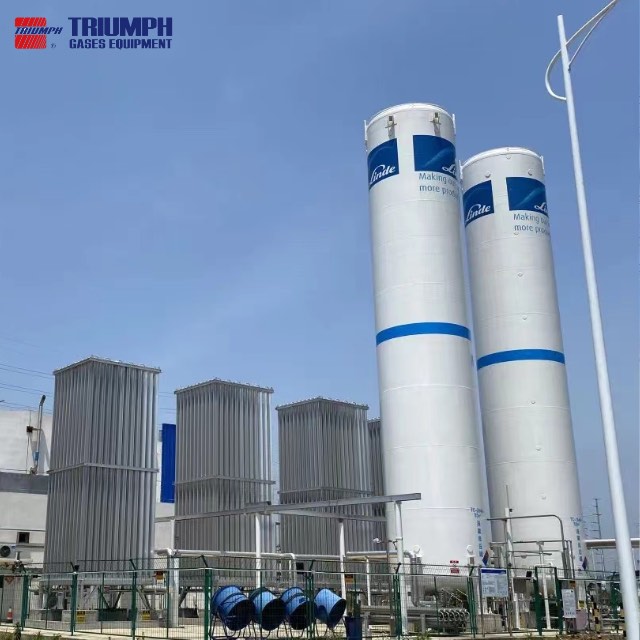
An industrial liquid nitrogen tank supports bulk storage. Common configurations cover capacities from several cubic meters to hundreds of cubic meters. The required volume depends on consumption and delivery schedules.
A Dewar usually holds a much smaller quantity. It suits laboratories, research facilities, and operations with limited nitrogen demand. Staff can move suitable portable models between work areas.
The difference affects purchasing and supply planning. Larger tanks reduce delivery frequency when consumption is high. Smaller vessels offer flexibility but require more frequent replenishment.
For example, industrial suppliers offer cryogenic storage configurations ranging from 5 m³ to 100 m³. Larger projects may require 200 m³ designs. These are product-specific examples, not universal capacity limits.
Both equipment types use insulation to limit heat transfer. Vacuum insulation reduces heat conduction and convection between vessel walls. Some industrial tanks also use perlite powder inside the evacuated insulation space.
A Dewar commonly uses a double-wall structure. The vacuum layer helps maintain low temperatures during storage. Its performance depends on vessel design, vacuum quality, and opening frequency.
Industrial tanks require insulation suited to their size and operating conditions. Buyers should review the insulation method and its tested performance. They should also check how the manufacturer monitors vacuum integrity.
Note: A vacuum-insulated design does not eliminate evaporation. Heat still enters the vessel, so some nitrogen gradually becomes gas.
Pressure control is a major difference between storage systems. Many industrial cryogenic tanks operate as pressure vessels. They can supply liquid nitrogen through controlled piping and suitable valves.
A typical industrial system may include pressure-building coils, pressure relief devices, level gauges, and pressure gauges. These components help manage operating conditions. The exact configuration depends on the required flow and downstream equipment.
Many laboratory Dewars operate near atmospheric pressure. They are designed for holding or dispensing smaller quantities. Some specialized Dewars have pressurized dispensing systems, so buyers should verify the model rather than assume all Dewars work the same way.
For industrial gas supply, a tank may connect to a vaporizer or cryogenic pump. The vaporizer converts liquid nitrogen into gas when the process needs gaseous nitrogen. A pump supports applications requiring controlled liquid transfer.
Evaporation rate indicates how much stored liquid is lost through heat input over time. It is an important specification for comparing liquid nitrogen containers. A lower rate can reduce replenishment needs.
Holding time depends on more than insulation. Vessel capacity, geometry, liquid level, ambient conditions, and withdrawal frequency also affect performance. Frequent access can increase heat input and nitrogen loss.
Buyers should compare static evaporation rates under consistent test conditions. They should also ask how the manufacturer defines the measurement. A specification without test conditions may not support a fair comparison.
Tip: Request the guaranteed daily evaporation rate and test conditions. Compare products at similar capacities and operating conditions.
Portable Dewars suit facilities that need nitrogen near individual workstations. Their smaller size makes handling easier. However, users must follow the equipment's handling and transport instructions.
Industrial tanks are usually installed in a designated outdoor or indoor area. Vertical tanks reduce ground footprint, while horizontal tanks may fit sites with height restrictions. Both designs need suitable access for delivery and maintenance.
Installation planning should cover foundations, vehicle access, piping routes, ventilation, and safety clearances. Buyers should confirm these details before selecting the tank orientation. A suitable design must fit both the site and the operating process.
A Dewar may cost less initially. It can be practical when nitrogen consumption is low. However, repeated deliveries and manual handling may increase operating costs over time.
An industrial tank usually requires a larger initial investment. It may reduce refill frequency and support centralized distribution. Its total cost depends on capacity, pressure rating, installation, accessories, and service requirements.
Maintenance also differs. Both systems need regular checks of valves, fittings, and insulation performance. Pressure vessels require inspections under applicable local regulations. Buyers should include service access and spare parts in their purchasing assessment.
Comparison factor | Industrial liquid nitrogen tank | Dewar |
|---|---|---|
Storage capacity | Medium to very large | Small to medium |
Typical use | Bulk storage and supply | Laboratory and local use |
Pressure design | Often pressure-rated | Often atmospheric |
Mobility | Usually fixed installation | Portable models available |
Liquid delivery | Piping, pumps, or controlled outlets | Manual or model-specific dispensing |
Replenishment | Bulk deliveries | More frequent refills |
Best fit | Continuous or high-volume demand | Low-volume or flexible demand |
An industrial liquid nitrogen tank is generally more suitable when a facility needs reliable bulk storage. It supports centralized supply and reduces dependence on small-container handling. Buyers should assess consumption, delivery schedules, and required supply pressure.
Manufacturing plants often consume nitrogen throughout the working day. Metal processing, electronics production, and chemical manufacturing may require a steady supply. Small Dewars can create unnecessary refill and handling work.
A bulk storage system provides a larger reserve. It can support multiple production lines through a connected distribution network. This arrangement also helps purchasing teams plan nitrogen deliveries.
For these facilities, capacity should match peak demand rather than average consumption alone. Buyers should include production expansion and possible delivery delays. This reduces the risk of running out during busy periods.
A centralized system stores liquid nitrogen in one main vessel. Piping then carries the required supply to different production areas. This reduces the need to move individual containers across the facility.
Some systems use vaporizers to provide gaseous nitrogen. Others use cryogenic pumps for liquid transfer. The correct setup depends on process pressure, flow rate, and delivery temperature.
For larger installations, buyers can review industrial cryogenic tank configurations. The available design should match the intended gas, storage capacity, and site conditions. A product's listed capacity alone does not confirm suitability.
Hospitals and medical gas facilities may need dependable nitrogen reserves. Their requirements can include equipment cooling, laboratory use, and other approved applications. Storage design must reflect the specific process and applicable medical standards.
Industrial sites also need sufficient reserves during peak production. A fixed tank can reduce frequent deliveries and simplify supply management. However, critical applications may require backup supply arrangements.
Buyers should evaluate consumption patterns and emergency requirements together. They should also confirm whether the proposed tank supports the required purity and delivery conditions. These checks are important before equipment selection.
A Dewar is often the better option when users need smaller quantities. It offers flexible storage and convenient access for local operations. Its design can suit facilities without the space or demand for a bulk tank.
Research laboratories often use nitrogen for sample preparation and experiments. Their daily consumption may vary between projects. A portable Dewar allows staff to keep nitrogen close to the point of use.
Smaller vessels can also suit testing rooms and university laboratories. They avoid the need for a large fixed storage installation. This can reduce site preparation and initial equipment costs.
However, laboratories should estimate actual usage before purchasing. A vessel that is too small may require constant refilling. A larger model may create unnecessary storage and handling demands.
Some medical and research facilities use liquid nitrogen to preserve biological materials. These applications need equipment designed for the storage method and sample requirements. A standard liquid nitrogen supply Dewar is not automatically suitable for long-term sample preservation.
Purpose-built biological storage Dewars may use specialized racks and neck designs. Some systems store samples in liquid nitrogen, while others use nitrogen vapor. The correct choice depends on the required temperature stability and sample protection.
Buyers should distinguish between liquid nitrogen supply vessels and biological storage equipment. They should check sample capacity, temperature uniformity, access frequency, and monitoring requirements. These details matter more than nominal vessel volume alone.
Small manufacturers may use nitrogen for occasional cooling or testing. A portable vessel can meet these needs without a centralized supply network. It also allows users to move nitrogen between approved work areas.
This approach works best when consumption remains low and predictable. Buyers should still account for refill access and safe handling procedures. The supply schedule must match actual usage.
For operations that need a compact cryogenic system, compare the process requirements carefully. A mini cryogenic tank design illustrates a smaller-scale tank category. However, an LNG model is not automatically suitable for liquid nitrogen. The gas service, temperature, pressure, materials, and certification must match.
Choosing equipment starts with the operating process. Buyers should not select a tank based on capacity alone. Consumption, pressure, evaporation, safety, and installation all affect performance.
Start by recording average daily nitrogen use. Then identify peak demand during production shifts. Include planned expansion and periods when deliveries may be delayed.
The usable storage volume is not always the same as nominal tank capacity. Operating limits and required liquid reserves affect the available quantity. Buyers should ask suppliers to calculate the recommended working volume.
A simple planning approach is to consider:
Average daily nitrogen consumption
Peak hourly or daily demand
Expected delivery lead time
Required emergency reserve
Allowance for normal storage losses
Tip: Share actual consumption records with the manufacturer. This helps avoid both undersized and oversized equipment.
Different processes require different delivery conditions. Some use liquid nitrogen directly. Others need gaseous nitrogen at a specified pressure and flow rate.
Buyers should confirm the required outlet pressure and maximum flow. They should also identify whether a vaporizer, pump, or pressure-building circuit is necessary. These choices affect the complete system configuration.
Never assume that a higher design pressure automatically means better performance. The tank must match the process and applicable regulations. The supplier should confirm the operating and design limits.
Compare the manufacturer's stated static evaporation rate. Check the test conditions, nominal capacity, and measurement method. These details help buyers evaluate different models fairly.
Vacuum stability is also important. Poor insulation performance can increase nitrogen loss and operating costs. Ask about vacuum inspection, maintenance procedures, and warranty coverage.
Cryogenic equipment can use different insulation arrangements. For example, some specialized systems use vacuum cold-box structures for other cryogenic gases. These are not direct substitutes for nitrogen storage tanks. See vacuum cold-box shells for liquid hydrogen and helium as a related example of cryogenic insulation equipment.
Liquid nitrogen can cause severe cold burns and oxygen displacement. Storage areas need suitable ventilation and risk controls. Staff must understand safe handling and emergency procedures.
Industrial tanks also require suitable pressure protection. Buyers should review relief valves, pressure gauges, liquid level indicators, and relevant piping components. Each accessory should match the design and operating conditions.
Check applicable pressure vessel codes and local inspection rules. Confirm the required certificates before ordering. Also ask who is responsible for installation, commissioning, and periodic inspection.
Note: Liquid nitrogen expands significantly when it vaporizes. Never use a sealed, non-pressure-rated container for liquid nitrogen storage.
After choosing the storage type, buyers need to compare manufacturers and technical specifications. A reliable purchasing decision should consider materials, dimensions, quality control, and long-term service. These factors affect safety and equipment life.
Start by confirming nominal and usable capacity. Then compare tank dimensions against the available installation area. Allow enough space for maintenance and safe operation.
Vertical tanks generally use less ground space. They may suit facilities with limited floor area but sufficient installation height. Horizontal tanks can work better where height is restricted.
For example, some manufacturers offer horizontal liquid nitrogen tanks for medical and industrial applications. A 15 m³ model is one available product configuration, not a standard requirement.
Buyers should also check transportation restrictions. Large tanks may need special lifting and delivery arrangements. Confirm site access before finalizing the design.
The inner vessel must withstand cryogenic temperatures. Stainless steel is commonly used in cryogenic tank construction. Its grade and thickness should match the service conditions and design requirements.
The outer vessel protects the insulation space. Its material depends on the tank structure and environmental conditions. Buyers should review corrosion protection and external coating requirements.
Material selection should consider more than the material name. Ask for specifications, design documentation, and relevant test records. Confirm compatibility with liquid nitrogen and the intended operating pressure.
Different facilities have different storage needs. Manufacturers may offer customized capacities, pressure ratings, orientations, and connection layouts. Buyers should provide clear technical requirements before requesting quotations.
Quality control should cover material inspection and welding procedures. It should also include pressure testing and final equipment checks. Ask for inspection records and certificates relevant to the ordered model.
Compare suppliers based on technical capability, not price alone. Review their experience in cryogenic equipment manufacturing. Confirm whether they can provide drawings and technical support before production.
Warranty terms should clearly define coverage and exclusions. Buyers should check whether valves, instruments, insulation systems, and accessories are included. They should also confirm the response process for technical issues.
Installation support is equally important. Large tanks may require foundation preparation, lifting plans, and piping connections. The supplier should provide suitable installation documents and commissioning guidance.
Long-term service can affect the total cost of ownership. Ask about spare parts, inspection support, and vacuum maintenance. A clear service agreement reduces uncertainty after delivery.
The following questions address common purchasing concerns. They help clarify the differences between storage vessels and their intended applications.
No. Both are insulated vessels designed for cryogenic storage. However, they differ in capacity, pressure design, mobility, and delivery functions.
Industrial tanks usually support larger storage volumes. Many are pressure-rated and connect to fixed piping systems. Dewars are commonly smaller and designed for local storage or dispensing.
The terms can overlap in product descriptions. Buyers should check the actual design and technical specifications. The equipment name alone does not establish its operating capability.
Not necessarily. Holding time depends on insulation quality, vessel size, geometry, and operating conditions. A larger tank may have a lower relative evaporation rate, but this is not guaranteed.
Opening frequency and liquid withdrawal also affect nitrogen loss. Static evaporation figures may not reflect actual operating performance. Buyers should compare test conditions before drawing conclusions.
Ask manufacturers for tested evaporation data. Also confirm whether the figures apply to the proposed capacity and configuration. This gives buyers a more reliable basis for comparison.
Yes, in some small-scale industrial applications. A suitable Dewar can support testing, localized cooling, and intermittent nitrogen use. Its capacity and dispensing method must match the process.
However, it may not suit continuous, high-volume demand. Frequent refilling can interrupt production and increase handling work. Some operations may also require higher flow rates than a portable vessel can provide.
For larger consumption, a fixed cryogenic tank is usually more practical. Buyers should compare supply demand, refill frequency, and installation costs. The decision should follow actual operating requirements.
A cryogenic storage tank is designed to hold liquids at very low temperatures. It usually includes an insulated inner vessel and an outer shell. Some designs also operate under pressure.
A pressure tank describes equipment designed to contain fluids at specified pressures. It does not automatically provide the insulation needed for cryogenic liquids. A cryogenic pressure vessel combines suitable low-temperature materials, insulation, and pressure protection.
Buyers should therefore check both temperature and pressure ratings. They must confirm that the vessel is approved for liquid nitrogen service. General pressure ratings alone are insufficient.
Choosing between a liquid nitrogen tank and Dewar depends on capacity, pressure, evaporation, and usage. The right system improves storage efficiency and reduces operating costs.
TRIUMPH provides reliable cryogenic storage solutions, customized designs, and technical support. Its tanks help industrial buyers achieve safer, more efficient nitrogen storage.
A: Tanks support bulk storage; Dewars suit smaller quantities.
A: Vacuum insulation reduces heat transfer and nitrogen loss.
A: It supports centralized supply and high-volume consumption.
A: Usually, but it can reduce refill and handling costs.
A: Check tested daily evaporation rates under similar conditions.


