
close
Choose Your Site
Global
Social Media


Selecting a supplier in this sector is never a simple commodity purchase. The stakes are immense for any facility. Your choice directly impacts plant safety, production uptime, and strict regulatory compliance. Today’s market brings complex challenges to the table. We face severe supply chain volatility and varying engineering standards across different regions. Relying solely on the lowest-bidder metrics often introduces dangerous hidden risks. It exposes your facility to unexpected downtime and severe operational hazards. This guide serves as an evidence-based, decision-stage checklist for procurement managers and plant engineers. We designed it to help you rigorously evaluate and shortlist potential partners. You will learn how to assess technical breadth, verify safety compliance, and measure true supplier reliability. Our goal is to equip you with actionable criteria for making secure, long-term procurement decisions. Navigating these procurement hurdles requires a clear, objective framework. You must demand verifiable proof of engineering excellence before signing any contract.
Technical Breadth Matters: A reliable supplier must demonstrate proven engineering capabilities across critical systems, from pressure regulation to vaporization.
Verifiable Compliance is Non-Negotiable: Safety certifications and material traceability must be independently verifiable, not just promised.
After-Sales SLAs Define Reliability: True supplier value is measured by emergency response times, spare parts availability, and commissioning support.
Framing the business problem requires a look at harsh operational realities. When you choose an underqualified supplier, you invite a cascade of equipment failures. You might save money on the initial invoice. However, this strategy quickly backfires. Poorly manufactured components degrade rapidly under pressure. They require constant adjustments and early replacements. This completely negates any upfront capital savings.
We must examine the economics of downtime. Imagine a failure in a single critical component. A frozen vaporizer can halt an entire production line instantly. If your facility produces high-value output, a four-hour shutdown costs hundreds of thousands of dollars. Initial cost savings become irrelevant immediately. You lose production capacity and frustrate your end customers. The operational disruption creates a massive financial ripple effect.
We also face severe safety and liability risks. Subpar metallurgy leads to catastrophic gas leaks. Poor quality control causes sudden pressure boundary failures. These incidents endanger your workforce daily. They invite massive legal liabilities and severe regulatory fines. You must prioritize high-quality industrial gas equipment to protect your facility. Buyers should evaluate long-term energy efficiency and lifecycle performance. Look closely at expected maintenance cycles. Focus heavily on operational reliability rather than just upfront capital expenditure.
A comprehensive supplier must possess specific solution categories. They need proven engineering depth across various fluid handling systems. You should evaluate their technical breadth rigorously before moving forward.
You need strict criteria for evaluating an Industrial Gases Pressure Regulating Device. We look for absolute flow stability first. Gas compatibility is another critical factor. You must handle corrosive and inert gases very differently. Corrosive media will destroy standard seals within weeks. Evaluate the drift rates carefully under varying load conditions. Drift causes the pressure to creep up over time. This requires constant manual adjustments. Poor pressure regulation ultimately damages your sensitive downstream equipment.
Performance markers matter heavily for an Industrial Gas Vaporizer. You might evaluate ambient, steam, or electric models. Real-world operational challenges test these units daily. Ice build-up mitigation remains a primary concern for ambient units. Severe icing reduces the heat transfer surface area dramatically. This drops your vaporization rate and starves the process. You also need footprint efficiency. The unit must perform reliably during extreme weather events. Proper engineering design prevents these costly freezing incidents.
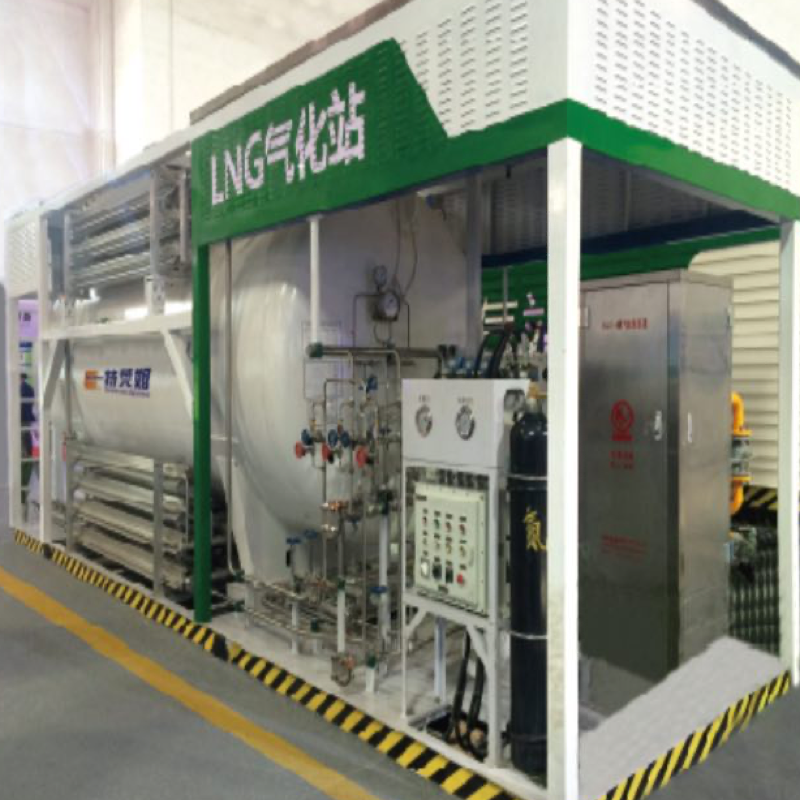
Integrated systems bring immense value to modern industrial plants. You see this clearly with LNG Skid Mounted Equipment. We evaluate the supplier’s ability to deliver pre-tested, turnkey systems. Traditional field assembly takes weeks and requires multiple contractors. Plug-and-play modularity reduces on-site installation time drastically. It minimizes integration risks across your pipeline. You simply connect the inlet, outlet, and power sources. Ensure they engineer these skids to fit your exact footprint limitations.
We must focus on engineering authoritativeness here. Use industry-standard lenses to evaluate a supplier's compliance maturity. Promises mean nothing without documented proof. You must demand transparency regarding their quality assurance protocols.
Certifications and audits form the baseline of trust. Essential manufacturing standards include ASME, ISO 9001, and CE/PED. The required standard depends heavily on your specific geographic region. You must request their latest independent audit reports. Never accept just a framed certificate on a wall. An audit report shows their daily operational reality and highlights any minor non-conformances.
Material traceability is absolutely necessary for safe operations. You need Positive Material Identification (PMI). This process uses spectrometry to analyze metal alloy composition instantly. You confirm the steel is actually 316L, not a cheaper substitute. Demand Mill Test Reports (MTRs) for all pressure-bearing components. This guarantees the structural integrity of your piping and vessels.
Advise your engineering team to evaluate in-house testing rigors. Suppliers should perform hydrostatic testing on all pressurized vessels. Pneumatic testing validates critical seal integrity. Non-destructive examination (NDE) capabilities prove manufacturing quality. They should use X-ray or ultrasonic testing to verify weld penetration.
Table 1: Core Compliance and Testing Standards
Assessment Category | Industry Requirement | Verification Method |
|---|---|---|
Manufacturing Process | ASME / CE / PED | Third-party audit reports |
Material Integrity | PMI & MTRs | Component batch documentation |
System Integrity | Hydrostatic / Pneumatic | Signed factory test logs |
Weld Quality | Non-Destructive Exam (NDE) | X-ray or ultrasound reports |
You must address the logistical and adoption risks inherent in equipment rollout. Procurement is only half the battle. Delivery and installation dictate project success. Experience matters deeply in this phase.
Lead time transparency separates good partners from bad ones. Assess their inventory buffering strategies closely. Review their raw material sourcing methods. This ensures quoted lead times remain realistic despite market fluctuations. Delays cost you valuable production time. A reliable supplier maintains strong relationships with secondary foundries to prevent bottlenecks.
Factory Acceptance Testing (FAT) is crucial. Require a rigorous FAT process before any equipment ever ships. Performance must match your specifications perfectly under simulated field conditions. Do not skip this step to save time. Catching a flaw during FAT takes hours to fix. Catching it during field commissioning takes weeks.
Evaluate their field service capabilities for installation and commissioning. Do they offer on-site engineering oversight? The critical integration phase requires expert supervision. Poor installation negates great engineering. They should send technicians to guide your local contractors.
We focus on trustworthiness by separating marketing promises from contractual realities. Trust is built in the months and years following the initial sale. Equipment requires ongoing support to function safely.
Guide your buyers to demand clear Service Level Agreements (SLAs). You need strict response time guarantees written into the contract. Technical support must be accessible rapidly. Emergency field deployment should happen within hours, not days. A production line cannot wait a week for a technician.
Assess the spare parts ecosystem carefully. The supplier must commit to maintaining local or regional stock. Critical wear-and-tear components must be readily available. We look specifically for valves, seals, and sensors. Waiting six weeks for a custom seal shipped from overseas is unacceptable. It destroys your operational efficiency.
Verify operator training and documentation standards. The supplier must provide comprehensive training sessions for your plant staff. Detailed, as-built documentation is mandatory for future maintenance. Ensure you receive accurate Piping and Instrumentation Diagrams (P&IDs) and comprehensive Operations and Maintenance (O&M) manuals.
We provide this concise, actionable decision framework for your final evaluation phase. Use this scorecard to rank competing suppliers objectively.
Financial stability and market tenure.
Verification of ISO/ASME (or regional equivalent) compliance.
Completeness of product range (regulators to skid systems).
Availability of verifiable material traceability (MTRs).
Proof of robust Factory Acceptance Testing (FAT).
Transparency in lifecycle costs and energy efficiency modeling.
Realistic, historically backed delivery lead times.
Contractual SLAs for emergency technical support.
Regional availability of critical spare parts.
Quality of provided operator training and technical documentation.
Supplier Evaluation Metrics Comparison Chart
Assessment Area | Basic Supplier (Red Flags) | Premium Partner (Green Flags) |
|---|---|---|
Component Sourcing | Unverified third-party parts | Full traceability via MTRs |
Performance Testing | Basic leak checks only | Rigorous FAT under load |
System Integration | Standalone parts delivery | Turnkey modular skids |
Maintenance Support | Reactive call center | Contractual SLA guarantees |
For your next-step actions, advise your buying team to request detailed references. Ask for contacts at facilities with similar throughput and gas types. Speak with their maintenance managers before finalizing the Request for Proposal (RFP).
Sourcing these complex systems represents a strategic partnership. It relies heavily on engineering trust and strict compliance assurance. You cannot treat this process as a simple transactional purchase. The reliability of your plant depends on the meticulous evaluation of every vendor on your shortlist.
Maintain a healthy skepticism during vendor interviews. Remind your buyers that any supplier avoiding direct questions about material traceability or long-term operational costs is a red flag. Transparency is the foundation of a safe, reliable partnership. If they cannot produce an audit report, walk away immediately.
Take action today to secure your facility. We encourage you to download the 10-point scorecard for your next procurement meeting. Contact your internal engineering team for a comprehensive equipment audit, or request a technical consultation from a verified industry expert.
A: Lead times vary significantly based on complexity. Off-the-shelf regulators often ship within two to four weeks. However, custom-engineered modular skids typically require 16 to 24 weeks. Current supply chain averages favor suppliers who buffer raw materials and manage local inventories efficiently.
A: You evaluate lifecycle efficiency by looking beyond the initial purchase price. Highlight factors like daily energy consumption, maintenance frequency, and expected equipment lifespan. A cheaper ambient unit might suffer frequent icing downtime, making it less efficient long-term than a reliable steam-heated alternative.
A: Yes, integration is entirely possible. It highlights the importance of modularity and custom engineering. You rely heavily on precise pressure regulating devices to bridge old pipelines with new systems safely. Expert suppliers will match legacy flange standards and pressure ratings during the design phase.
A: A robust SLA must detail preventative maintenance schedules clearly. It should provide guaranteed emergency response times for field service technicians. Furthermore, it must outline specific commitments regarding local spare parts availability for high-wear components like seals and control valves.


