
close
Choose Your Site
Global
Social Media


Transitioning a liquefied natural gas project from feasibility to procurement requires finalizing the containment strategy. Selecting the wrong configuration leads to regulatory bottlenecks, excessive land acquisition costs, and compromised thermal efficiency. Project engineers face immense pressure during these early stages. They must balance capital budgets against strict environmental safety codes. An inappropriate containment choice often stalls development and forces expensive redesigns. Facility operators also suffer long-term consequences from poorly integrated systems.
This article provides an evidence-based comparison of containment technologies, scale-appropriate solutions, and integration requirements. We aim to help project engineers and procurement leads shortlist the right architecture. You will learn how to navigate standard engineering frameworks like API 620, NFPA 59A, and EN 14620 while managing site-specific risk profiles effectively.
Containment dictates footprint: Full containment requires the least land but demands the highest CAPEX; single containment is cheaper but requires massive spill mitigation zones.
Scale matters: Modular, vacuum-insulated tanks are replacing traditional built-in-place infrastructure for decentralized and small-scale industrial applications.
Integration is critical: A tank’s operational viability relies heavily on its alignment with BOG (Boil-Off Gas) management and downstream vaporization equipment.
Every successful terminal begins with a rigorous site evaluation. You cannot simply pick a tank design based on budget alone. Engineers must evaluate multiple physical and regulatory constraints before breaking ground. By standardizing your evaluation criteria, you prevent costly late-stage project revisions.
Site and Footprint Constraints: You must assess available land for vapor dispersion zones and spill dikes. Urban or congested industrial sites automatically rule out certain designs. If a facility sits near residential zones, footprint limitations dictate safer, tighter containment options.
Geotechnical and Seismic Factors: Evaluating soil bearing capacity and regional seismic activity is non-negotiable. These elements dictate foundation costs and outer-wall material choices. For example, high-seismic zones might favor specific concrete reinforcements or distinct foundation isolators. Poor soil requires deep piling, which alters your baseline budget.
Capacity and Throughput Needs: You should match tank volume precisely to the application. Different use cases require different thermodynamic behaviors. Peak shaving facilities need rapid discharge capabilities. Baseload import/export terminals require massive volume stability. Marine bunkering or vehicular fueling demands frequent, smaller-scale cycling.
Regulatory Compliance: Navigating local and international safety codes defines your acceptable risk radii. Standards like NFPA 59A and EN 14620 outline stringent construction rules. Compliance dictates everything from minimum spacing distances to acceptable boil-off rates. Failing to integrate these codes during the feasibility stage guarantees permitting failures.
Common Mistake: Project developers often finalize land acquisition before completing a vapor dispersion analysis. This oversight forces them into highly expensive full containment solutions because they lack the physical space for cheaper single containment spill dikes.
Choosing the right LNG storage tank involves evaluating four primary architectural designs. Each offers a unique balance between capital expenditure (CAPEX) and physical safety margins.
Table 1: Comparison of Primary LNG Tank Configurations
Design Type | Primary Inner Material | Outer Shell Capability | Footprint Requirement | Relative CAPEX |
|---|---|---|---|---|
Single Containment | 9% Nickel Steel | Holds insulation only (no liquid) | Extremely High | Low |
Double Containment | 9% Nickel Steel | Contains liquid spills (no vapor) | Medium | Medium |
Full Containment | 9% Nickel Steel | Contains both liquid and vapor | Low | High |
Membrane Storage | Flexible Metallic Membrane | Concrete load-bearing shell | Very Low | High (Specialized) |
Design: This traditional configuration features an inner 9% nickel steel vessel designed to hold cryogenic liquid safely. An outer carbon steel shell holds the insulation. Importantly, this outer shell is not designed to contain liquid LNG during a catastrophic spill.
Pros/Cons: Single containment offers the lowest upfront CAPEX. The materials are standard, and construction techniques are widely understood. However, it requires the highest land allocation. You must construct mandatory external earthen dikes or bund walls to catch potential spills.
Best For: Remote facilities with unlimited footprint availability. If your project sits in an isolated desert or expansive coastal plain, single containment provides exceptional value.
Design: This system upgrades the safety profile. The outer tank, typically constructed of concrete or specialized steel, sits closely around the inner vessel. It is designed to contain any spilled liquid if the inner tank fails. However, it cannot contain the resulting vapor cloud.
Pros/Cons: This design significantly reduces the required footprint compared to single containment. You eliminate the massive external earthen dikes. Yet, it still requires considerable safety offsets to account for potential vapor cloud dispersion.
Design: Full containment represents the gold standard for populated areas. A pre-stressed concrete outer tank encases the inner vessel. If the primary inner tank fails, this concrete shell safely contains both the cryogenic liquid and the expanding vapor.
Pros/Cons: It delivers the highest structural safety and the smallest footprint. Consequently, it commands the highest initial CAPEX. Construction lead times are also significantly longer due to complex concrete pouring and pre-stressing requirements.
Best For: Urban terminals, space-constrained ports, and regions enforcing stringent environmental safety regulations. When land is scarce or highly priced, full containment becomes the only viable engineering choice.
Design: Membrane tanks utilize a thin, flexible inner metallic membrane. This membrane transfers the hydrostatic load of the liquid through specialized insulation directly to a concrete outer shell. The concrete handles the structural stress.
Pros/Cons: They offer a highly efficient volume-to-footprint ratio. You maximize storage capacity within a compact area. However, the installation requires highly specialized EPC (Engineering, Procurement, and Construction) contractors. Minor welding flaws in the membrane can lead to significant operational issues.
The industry is experiencing a massive shift toward decentralization. Companies are moving away from massive centralized terminals for specific use cases. Off-grid manufacturing, remote mining operations, and regional power generation require agile, smaller-scale infrastructure. Building massive concrete tanks makes no financial sense for a remote 50-megawatt power plant.
For mid-sized regional projects, engineers typically specify a Cryogenic LNG Storage Tank. These are shop-fabricated, cylindrical vessels rather than built-in-place flat-bottom structures. They utilize vacuum-perlite or advanced multi-layer insulation systems.
These cylindrical solutions provide standardized capacities, which drastically cuts down engineering design time. They operate at higher working pressures than traditional flat-bottom variants. Because they rely on superior vacuum insulation, they exhibit significantly lower daily boil-off gas rates. This thermal efficiency makes them ideal for facilities where the fuel might sit unused for days or weeks.
When dealing with micro-grid setups, temporary power solutions, or localized vehicle fueling stations, scale decreases even further. A Mini Cryogenic Tank for LNG provides the perfect balance of mobility and reliable containment.
The advantages of these mini tanks are substantial:
Skid-mounted designs: They arrive on-site integrated into a steel frame, minimizing civil works.
Plug-and-play installation: You can connect them to piping networks in days rather than months.
Simplified permitting: Their smaller volume often triggers fewer regulatory hurdles and smaller safety radii.
Rapid deployment timelines: They suit temporary mining camps or emergency power setups perfectly.
A storage vessel cannot operate in isolation. Its viability relies entirely on how well engineers integrate it with surrounding systems. Poor integration causes pressure build-ups, excessive venting, and equipment degradation.
Heat ingress is inevitable, regardless of insulation quality. This heat causes the liquid to evaporate continuously, generating boil-off gas. Your tank selection directly impacts the sizing of BOG compressors and reliquefaction units. A massive single-containment tank with perlite insulation produces a different daily evaporation rate than a vacuum-insulated bullet tank. You must size your BOG management system to handle these specific expected daily rates. Failing to manage BOG effectively leads to flaring, which wastes valuable product and violates environmental emission standards.
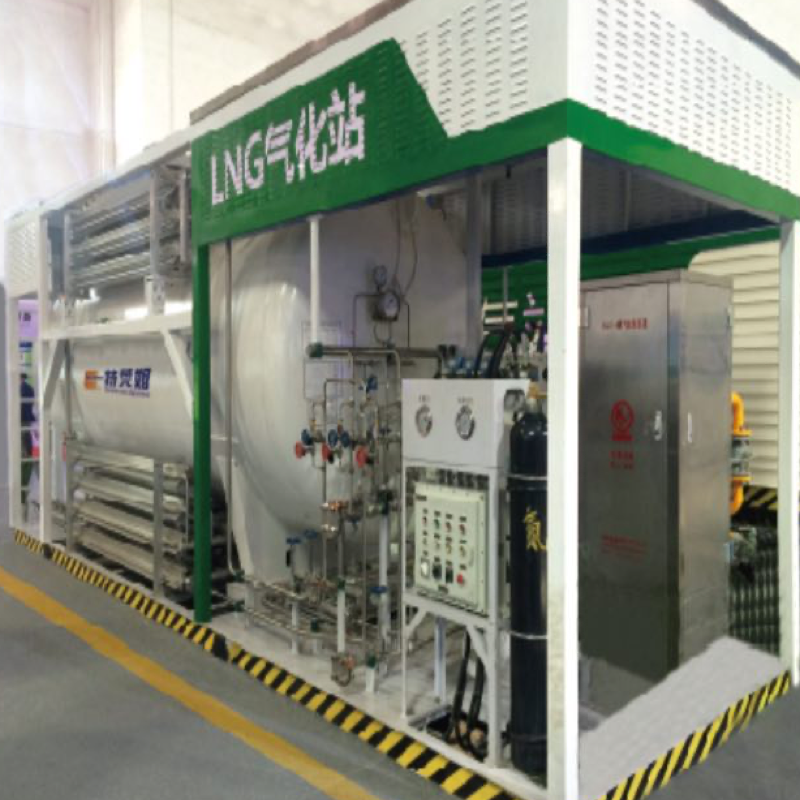
Your containment vessel must feed liquid into the vaporization process smoothly. Ensuring seamless thermal and pressure integration between the storage system and ambient air or water-bath vaporizers is critical. The LNG Vaporizing Station Equipment must handle the exact pressure and temperature outputs defined by the tank.
Engineers must design piping and pump configurations very carefully. They must handle specific send-out rates without cavitating the pumps. Furthermore, sudden changes in downstream demand cannot be allowed to stress the inner tank walls through pressure hammering. A well-integrated system uses automated control valves to balance the liquid withdrawal rate against the vaporizer's thermal capacity.
Best Practice: Always design the transfer piping with adequate thermal relief valves. Liquid trapped between closed valves will rapidly warm, expand, and rupture the pipe if not properly relieved.
Executing an energy infrastructure project involves navigating severe logistical and operational hazards. Procurement teams must anticipate these hurdles early in the planning phase to avoid schedule overruns and subsequent financial penalties.
Constructing standard infrastructure relies heavily on specialized materials. The inner shells require extensive quantities of 9% nickel steel. Securing this material often involves long international lead times. Furthermore, sourcing specialized perlite insulation in massive volumes can strain regional supply chains. Project schedules must account for these procurement delays. A delay in securing nickel steel plates halts the entire critical path of the project.
You cannot entrust cryogenic construction to standard civil contractors. There is a high risk of thermal performance degradation or catastrophic structural failure if contractors lack specific cryogenic experience. Welding 9% nickel steel requires exacting procedures and certified technicians. Similarly, pouring and settling perlite insulation correctly ensures there are no warm spots. Inexperienced EPC firms often rush the insulation settling process, leading to higher-than-expected boil-off rates later in the operational lifecycle.
Operating these facilities requires consistent maintenance vigilance. You must factor in vacuum loss over time when utilizing modular bullet tanks. Typically, vacuum levels require checking and potential re-evacuation every few years. Internal pump maintenance requires carefully planned outages, as removing a cryogenic pump for servicing is a complex procedure. Finally, periodic statutory inspections mandate thorough testing of all safety relief valves and foundation settlement sensors.
Finalizing your containment strategy demands a systematic approach rather than guesswork. Navigating the complexities of project planning requires aligning physical constraints with engineering realities.
Shortlisting Logic: Use a step-by-step decision flow. Evaluate regulatory footprint limits first. If land is constrained, immediately look to full containment or vertical modular designs. Next, define your required capacity and assess thermal efficiency requirements. Finally, align the shortlisted options with your available capital budget.
Next-Step Actions: Move from conceptual selection directly to Front-End Engineering Design (FEED). During FEED, request detailed vendor specifications. Ensure you prioritize system integration between the containment vessel, the BOG management system, and the downstream vaporizers. Secure specialized EPC contractors early in the process.
A: For large-scale, flat-bottom tanks (single, double, or full containment), the typical BOR ranges from 0.05% to 0.1% per day. In contrast, shop-fabricated, vacuum-insulated bullet tanks achieve superior thermal efficiency. Their boil-off rates are significantly lower, often dropping below 0.01% per day, making them ideal for long-term hold times in smaller decentralized projects.
A: Constructing a traditional built-in-place full containment tank typically takes 36 to 48 months due to complex concrete pouring, pre-stressing, and stringent cryogenic welding protocols. Conversely, pre-fabricated modular solutions and skid-mounted tanks are manufactured off-site. They can be delivered and fully installed within 6 to 12 months.
A: Yes, if it is a modular, skid-mounted mini tank or a standardized cylindrical bullet tank. These are designed for mobility and plug-and-play installation. Traditional built-in-place infrastructure (like large flat-bottom tanks) relies on permanent concrete foundations and complex civil works, making relocation structurally impossible and financially unviable.
A: Routine maintenance focuses heavily on thermal efficiency and safety. Operators must manage ice buildup on ambient air vaporizers by cycling parallel units. They must also perform routine calibration and leak-checks on pressure relief valves. For water-bath vaporizers, inspecting the heat exchanger tubes for scaling and verifying heating element efficiency are critical recurring tasks.


