

close
Choose Your Site
Global
Social Media


Can ordinary steel withstand LNG temperatures? Not always. At −162°C, poor material choices can cause brittle fractures and costly failures. Choosing an LNG Storage Tank requires careful evaluation of toughness, pressure, insulation, and corrosion resistance. This guide explains the key factors engineers and buyers should consider before selecting materials.
Austenitic stainless steel is widely considered for cryogenic equipment because it can retain useful toughness at very low temperatures. Grades such as 304L and 316L are potential choices for LNG-contacting components, depending on the design conditions. Their suitability also depends on strength requirements, fabrication procedures, weld quality, and the applicable design code.
Grade 304L offers good cryogenic performance and weldability. Its relatively low carbon content helps reduce the risk of sensitization during welding. Grade 316L contains molybdenum, which can improve resistance to certain forms of corrosion. However, this additional feature does not automatically make 316L the better choice for every LNG application. The operating environment and project specifications must guide the decision.
Engineers should also consider the full fabrication process. Plate forming, welding, heat input, joint preparation, and inspection can affect the finished vessel's integrity. Material certificates alone cannot confirm that the completed tank meets every requirement. The material grade, manufacturing process, and inspection records must be evaluated together.
Nickel-alloyed steels are used in certain cryogenic applications because nickel can improve low-temperature toughness. Their suitability depends on the specific alloy, nickel content, heat treatment, and qualified minimum design temperature. Some nickel steels are appropriate for particular low-temperature storage services, but they should not be assumed suitable for LNG merely because they perform well at reduced temperatures.
Engineers must verify the material's mechanical properties at the intended operating temperature. Relevant information includes impact-test results, allowable stress, tensile strength, and code acceptance. The selected grade must also suit the vessel's fabrication method and inspection requirements. A material that performs adequately in one pressure vessel may not meet the requirements of another tank design.
Carbon steel may be suitable for outer shells, foundations, supports, and other structural components when their temperatures and loading conditions permit. These parts do not necessarily contact LNG directly. Their material requirements can therefore differ substantially from those of the inner vessel.
However, carbon steel should not be treated as a universal choice for every tank component. Cold spots, accidental LNG contact, or exposure to cryogenic vapor may create additional requirements. Engineers must evaluate credible operating and abnormal conditions before approving the specification.
Tip: Request a component-by-component material schedule instead of accepting a single material grade for the entire tank.
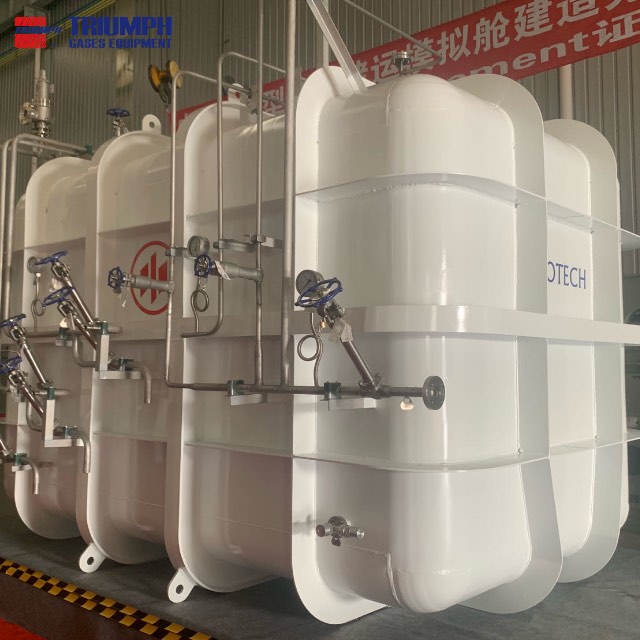
Cryogenic temperature is one of the most important factors in LNG tank material selection. Some steels can withstand substantial loads at room temperature but become less resistant to sudden fracture when cooled. This behavior can allow a crack to spread rapidly, sometimes before visible deformation provides a warning. The risk is especially serious in a pressure-retaining vessel or a component exposed to unexpected LNG contact.
Engineers therefore evaluate the minimum design metal temperature, impact toughness, and permitted material grades. Charpy V-notch impact testing may be required under the governing code or project specification. Test temperatures and acceptance criteria depend on the material, thickness, and applicable requirements. A material's room-temperature tensile strength cannot replace this assessment.
The evaluation should cover more than the inner vessel. Supports, connecting pipes, valves, and nearby structural parts may also experience low temperatures during abnormal conditions. Their materials must suit the temperatures they could realistically encounter. Engineers should also consider leak scenarios, thermal gradients, and inspection access when assessing the consequences of material failure.
Materials contract as their temperature decreases. In an LNG tank, the inner vessel becomes extremely cold while the outer shell may remain much warmer. These different temperature conditions produce different amounts of contraction. If the design does not accommodate this movement, stresses can develop around supports, connections, and welded joints.
Engineers calculate thermal movement using material properties, component dimensions, and expected temperature changes. They then consider sliding supports, flexible piping connections, expansion allowances, and other suitable design measures. These features must accommodate movement without compromising stability or pressure containment. The precise arrangement depends on the vessel geometry and support system.
Differential contraction also matters when selecting materials for connected components. A pipe, support, and vessel wall may respond differently to the same temperature change. The design must account for their interaction rather than assessing each part independently. Thermal analysis can help identify high-stress locations before fabrication begins.
Welding quality directly affects the reliability of an LNG storage tank. Poorly controlled welding can introduce defects, residual stress, or local changes in material properties. These issues become more important when the completed vessel must retain toughness at cryogenic temperatures.
Fabricators should use qualified welding procedures and suitable filler metals. Procedure qualification must address the selected base material, joint configuration, thickness, and applicable code requirements. Heat input and interpass temperature may also require control. Inspection methods can include visual examination, radiographic testing, ultrasonic testing, or other techniques specified for the project.
The inspection plan should be established before manufacturing begins. This allows the buyer to confirm which welds require examination and which acceptance criteria apply. Repair procedures also need qualification where required. A sound material choice cannot compensate for inadequate fabrication controls.
Tip: Confirm cryogenic material qualifications and weld inspection requirements before approving the fabrication drawings.
Design pressure affects the required strength, wall thickness, and material specification. Engineers must distinguish normal operating pressure from the maximum pressure used for design. They also consider temperature-dependent allowable stress, corrosion allowance where applicable, and relevant load combinations. These values help determine whether the selected material and vessel dimensions meet the design requirements.
Tank configuration makes a substantial difference. Large LNG storage tanks commonly operate under relatively low internal pressure, while transportable cryogenic vessels may use pressure-vessel designs. These systems have different structural arrangements and code requirements. A specification developed for a conventional LPG vessel cannot automatically be applied to an LNG vessel operating near −162°C.
Pressure alone does not determine wall thickness. Vessel geometry, material properties, joint efficiency, external loads, and code rules also influence the calculation. The engineering team must verify the complete design rather than selecting a material based on a nominal pressure rating.
Vertical tanks, horizontal vessels, and ISO tank containers experience different structural loads. A large stationary tank must accommodate liquid head, roof and shell loads, foundation movement, wind, and potentially seismic forces. A transportable vessel must also withstand handling, lifting, vibration, and transport-related loading.
These conditions influence material strength, thickness, support arrangement, and fabrication details. A mobile tank may require additional attention to frame connections and local stresses. A stationary installation may place greater emphasis on foundation interaction and long-term structural stability. In both cases, engineers must evaluate the complete loading scenario.
Material selection should therefore follow the intended application. Buyers should identify whether the equipment will remain at one facility, move between sites, or serve as part of a distribution system. This information helps manufacturers determine the relevant design assumptions and qualification requirements.
The inner vessel contains the cryogenic liquid, while the outer shell provides a separate structural and environmental function. In vacuum-insulated vessels, the space between these components helps limit heat transfer. The inner vessel commonly requires a material qualified for cryogenic service. The outer shell can use a different material if it meets its own structural, temperature, and environmental requirements.
A cryogenic ISO tank may use a stainless-steel inner vessel, a carbon-steel outer shell, and vacuum multilayer insulation. This is an example, not a universal specification. Actual construction depends on the tank design, intended service, transport requirements, and applicable standards.
The same distinction applies to piping, valves, supports, and connections. Each component requires a suitable material and design basis. Buyers evaluating Cryogenic Storage Tank Series should request details for the complete assembly rather than assuming that the advertised inner-vessel material describes every component.
Insulation reduces heat entering the LNG storage tank. Lower heat ingress helps control boil-off and maintain the required storage conditions. Vacuum multilayer insulation is one approach used in cryogenic vessels. Other systems may use different insulation materials and arrangements according to tank size, design pressure, and operating requirements.
Insulation selection also affects the materials surrounding it. The design must accommodate thermal contraction, maintain insulation integrity, and limit unwanted heat transfer through supports or connections. Vacuum-insulated systems require suitable vacuum integrity and control of potential leaks or deterioration. Other insulation arrangements may require moisture protection and careful joint sealing.
Engineers should evaluate insulation and structural materials together. A material with suitable mechanical properties may still create a design challenge if its thermal conductivity or interface behavior increases heat ingress. The final arrangement must satisfy both structural and thermal requirements.
Corrosion exposure varies across the tank assembly. The outer shell may face rain, humidity, salt-laden air, industrial pollutants, or damaged protective coatings. The inner vessel encounters a different service environment and requires materials compatible with the stored fluid and operating conditions.
Engineers should assess the installation location and expected maintenance conditions. Outdoor coastal facilities may require more demanding coating and corrosion-control measures than protected indoor installations. Inspection access, drainage, surface preparation, and coating repair also influence long-term performance.
Stainless steel is not immune to every form of corrosion. Its performance depends on the grade, environment, fabrication quality, and exposure conditions. Likewise, carbon steel can provide reliable service when its application, protection, and inspection plan are appropriate. Material selection should reflect the actual environment rather than relying on general claims about corrosion resistance.
Supports, piping penetrations, and structural connections can create thermal bridges. These paths allow heat to move into the cold vessel more readily than through the insulation system. Excessive heat ingress may increase boil-off and place additional demands on the storage system.
Engineers assess the geometry and materials of these connections when designing the insulation arrangement. They must preserve structural strength while limiting unnecessary heat transfer. At the same time, connections must tolerate differential contraction and remain stable under the specified loads.
A practical review should include support design, insulation continuity, connection details, and potential cold spots. The goal is not simply to select materials with low thermal conductivity. Each component must also meet its mechanical and safety requirements.
Tip: Ask suppliers to explain how the proposed insulation system controls heat ingress at supports and piping connections.
Engineers should compare several mechanical properties before approving an LNG storage tank material. Yield strength indicates when permanent deformation begins, while tensile strength describes the maximum stress a material can withstand during a tensile test. Cryogenic toughness indicates its ability to resist fracture under specified low-temperature conditions.
These properties serve different purposes. High tensile strength does not guarantee adequate resistance to brittle fracture. Material data must reflect the relevant temperature and thickness conditions. Engineers should review impact-test results, allowable stresses, and the requirements of the governing design code.
Thermal conductivity affects how readily heat passes through a material. Thermal expansion describes how its dimensions change as temperature changes. Both properties influence the interaction between the inner vessel, supports, piping, and insulation system.
Engineers need to balance thermal performance with structural requirements. A low-conductivity material may help reduce heat transfer, but it must still meet strength, fabrication, and service requirements. Thermal expansion data also help determine the movement expected during cooldown and warming.
Material selection must account for manufacturing capabilities. Some grades require specific welding procedures, filler metals, or additional inspection. Plate thickness, forming operations, joint design, and repair access can also affect production quality and project schedules.
Buyers should confirm that the manufacturer can document its fabrication controls and inspection procedures. Review material certificates, welding procedure qualifications, and required nondestructive examination records. These documents help establish whether the completed vessel matches the approved specification.
The governing code determines which materials, design methods, fabrication procedures, and inspections are acceptable. Depending on the tank configuration and jurisdiction, relevant requirements may include ASME pressure-vessel rules, LNG facility standards, and transport regulations.
Not every standard applies to every tank. Engineers must establish the equipment classification and intended service before selecting the governing requirements. They should also confirm the applicable editions and any local regulatory obligations.
The operating profile influences material qualification and inspection planning. Frequent filling and unloading can produce repeated temperature changes. Pressure fluctuations, maintenance cycles, and expected service life may introduce additional design considerations.
Engineers should define the normal operating range and credible abnormal conditions. They can then assess whether the selected materials remain suitable throughout the expected service life. The assessment should cover the complete assembly, including piping connections and structural supports.
Material traceability connects each component to its documented specifications and manufacturing history. Depending on the project, required records may include material test certificates, heat numbers, impact-test results, welding documentation, and inspection reports.
These records help buyers verify compliance and support future maintenance. A material grade printed on a quotation is not sufficient evidence of suitability. The delivered materials and completed vessel must meet the approved design documents and applicable acceptance criteria.
Tip: Confirm the governing code, required material tests, and inspection records before placing the purchase order.

Start by identifying the equipment type. A stationary LNG storage tank, a pressurized cryogenic vessel, and a transportable ISO tank may require different material specifications. The intended capacity, design pressure, minimum design temperature, and installation environment should be established first.
Buyers can review the manufacturer's product range to identify the relevant equipment category. They should then request the technical specification for the proposed model. Confirm that the material grades and insulation arrangement suit the actual application.
The lowest initial material cost does not necessarily produce the lowest total ownership cost. Fabrication, insulation, corrosion protection, inspection, maintenance, and expected service life all affect the overall investment.
A higher-cost material may be justified when it provides required performance or simplifies maintenance. However, buyers should avoid paying for properties their application does not require. The engineering team should compare technically compliant alternatives using consistent design assumptions.
Before approving a quotation, request a documented material schedule for the inner vessel, outer shell, piping, supports, and other critical components. Check the design temperature, design pressure, insulation method, applicable standards, inspection scope, and material certification requirements.
Also distinguish LNG service from conventional LPG service. A pressure tank advertised for LPG does not automatically qualify for LNG at approximately −162°C. Its materials, design, and manufacturing records must demonstrate suitability for the intended cryogenic conditions.
For project discussions, buyers can contact TRIUMPH and request the technical documentation for the relevant tank configuration.
Tip: Obtain written confirmation of cryogenic suitability before comparing quotations or approving a tank design.
Selecting an LNG Storage Tank material requires careful evaluation of cryogenic toughness, pressure, insulation, corrosion resistance, and applicable standards. Proper material selection supports safety, durability, and lower maintenance costs.
TRIUMPH provides cryogenic storage solutions designed around specific project requirements. Its tank systems help buyers evaluate suitable configurations and material specifications for reliable long-term operation.
A: Stainless steel and qualified cryogenic alloys are common choices for inner vessels.
A: They maintain toughness near −162°C and reduce brittle fracture risks.
A: They assess pressure, temperature, strength, insulation, corrosion, and applicable standards.
A: Yes. Fabrication, insulation, inspection, and maintenance affect lifecycle costs.
A: Yes, for suitable outer structures, provided temperature and loading requirements are met.
A: Review material certificates, impact tests, welding records, and code compliance.


