
close
Choose Your Site
Global
Social Media


Sizing a cryogenic tank presents a critical engineering dilemma for modern industrial facilities. You must strike a delicate balance between minimizing capital expenditure and preventing operational disruptions. Miscalculations often carry severe financial risks. Oversizing your storage capacity leads to excessive Boil-Off Gas (BOG). This wastes valuable liquid product into the atmosphere and reduces overall process efficiency. Undersizing guarantees high delivery premiums and risks unexpected production line shutdowns during demand spikes.
This article provides an evidence-based framework tailored for facility managers and procurement engineers. We will help you calculate exact volume requirements based on real-world consumption data. You will also learn how to evaluate crucial technical specifications and navigate complex compliance standards smoothly. Mastering these principles ensures your facility maintains a continuous, cost-effective gas supply.
Optimal sizing relies on matching average daily consumption rates with regional delivery schedules and peak demand buffers.
Selection between micro bulk and bulk storage hinges on a threshold of roughly 3,000–5,000 cubic meters of monthly gas consumption.
Maximum Allowable Working Pressure (MAWP) and insulation type (Perlite vs. Multi-layer) are just as critical to procurement as physical volume.
Compliance with local standards (ASME, EIGA, BCGA) dictates installation footprint, safety clearances, and civil engineering costs.
Facility managers frequently underestimate the hidden costs associated with improper equipment sizing. The financial penalties manifest differently depending on whether you underestimate or overestimate your daily gas consumption.
Selecting a vessel too small for your operational load forces your gas supplier to schedule frequent partial fills. Industrial gas logistics heavily favor bulk deliveries. Suppliers often charge premium transport fees for frequent, low-volume deliveries. Furthermore, undersizing introduces severe operational risks. If your facility experiences an unexpected production spike or if a winter storm delays delivery trucks, your production line could run entirely dry. Shutting down a metallurgical furnace or a commercial food freezing line due to gas starvation costs significantly more than upgrading your storage capacity upfront.
Conversely, buying the largest possible vessel is rarely the right strategy. Cryogenic liquids require extremely low temperatures to remain in a liquid state. Even highly insulated vessels allow a tiny amount of ambient heat to leak inside. This heat vaporizes the liquid, creating Boil-Off Gas (BOG). If your facility withdraws gas rapidly, this pressure naturally dissipates into your production line. However, if you store cryogenic liquids too long without sufficient withdrawal rates, passive pressure builds up inside the inner vessel. Once the internal pressure reaches the safety valve threshold, the system vents BOG into the atmosphere. In commercial terms, venting BOG means you are literally venting money into the air.
To avoid both penalties, engineers target a very specific utilization window. The goal is selecting a capacity capable of covering 1.5 to 2 times the volume required between scheduled deliveries. This ratio provides adequate buffer for supply chain delays while maintaining a high enough daily withdrawal rate to prevent passive pressure build-up and BOG venting.
Accurate sizing requires moving beyond estimations and applying rigorous mathematical models to your facility data. Procurement teams should follow a structured calculation process to determine the exact geometric volume required.
Before purchasing new equipment, you must audit your historical flow rates. Review past purchasing invoices and flow meter logs over a twelve-month period to account for seasonal variations. Project future capacity by factoring in planned facility expansions or new production shifts. Establish a firm "Average Daily Consumption" metric measured in liquid liters or gaseous cubic meters.
Once you establish daily usage, apply standard engineering practices to calculate usable volume. Follow these structured steps to determine your target capacity:
Identify your baseline average daily consumption rate.
Consult your regional gas supplier to determine the standard days between deliveries.
Multiply your daily consumption by the delivery interval.
Add a 30% safety buffer to accommodate unexpected peak demand or weather-related transit delays.
Combine these figures to identify your minimum net usable volume.
Buyers often mistakenly assume a 10,000-liter vessel provides 10,000 liters of usable product. A cryogenic vessel is never run to absolute zero. Operators must leave a residual amount of liquid, known as the "heel," inside the vessel. This heel usually accounts for 10% to 15% of the gross capacity. Retaining this liquid maintains the internal tank temperature at cryogenic levels. If you empty the vessel completely, the inner walls warm up. The next delivery will flash into gas upon contact with the warm steel, causing massive product loss and dangerous pressure spikes. Always factor the heel requirement into your final gross volume calculations.
After defining your volumetric requirements, you must choose the appropriate storage category. The industry divides stationary storage into two primary classifications based on footprint and flow capabilities.
A Micro Bulk Cryogenic Tank typically offers a capacity under 2,000 liters (2m³). These units bridge the gap between high-pressure cylinders and massive stationary installations.
Ideal Use Case: These units perfectly serve laser cutting shops, moderate-volume medical facilities, or laboratories upgrading from liquid dewars.
Benefits: Micro bulk systems require a significantly smaller footprint. They boast lower initial capital expenditure and demand much simpler foundation requirements. Facilities can deploy these units rapidly, often without requiring massive cranes or extensive concrete pouring.
Limitations: They lack the vaporization capacity for continuous, high-volume base load industrial processes. Heavy consumers will deplete a micro bulk unit too quickly, triggering the undersizing penalties mentioned earlier.
A 2-200m³ Cryogenic Tank for Industrial Gases represents the standard for heavy manufacturing and large-scale processing.
Ideal Use Case: High-consumption sectors like metallurgy, petrochemical refining, large-scale food freezing, and semiconductor manufacturing rely exclusively on bulk storage.
Benefits: These large vessels unlock massive economies of scale on bulk gas pricing. Manufacturers engineer them specifically for continuous flow. They support customizable, high-throughput vaporization systems necessary for feeding heavy industrial pipelines.
Limitations: Bulk installations require significant civil works, including deep concrete foundations. They also demand strict adherence to regulatory safety perimeters, eating up valuable facility real estate.
Equipment Comparison Matrix
Feature | Micro Bulk Systems (< 2m³) | Bulk Storage (2-200m³) |
|---|---|---|
Target Consumption | Under 3,000 m³ monthly | Over 5,000 m³ monthly |
Footprint Requirements | Minimal; fits on reinforced pads | Extensive; requires deep concrete foundations |
Installation Speed | Rapid (days) | Lengthy (weeks/months for civil works) |
Vaporization Capacity | Low to moderate flow rates | Continuous, heavy base load flow rates |
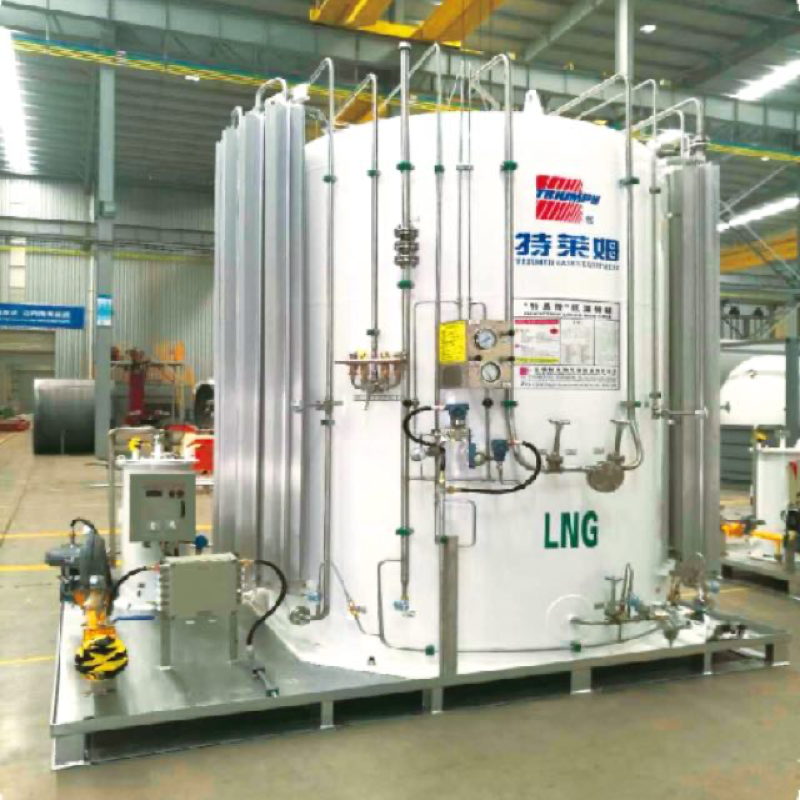
Procuring a Cryogenic Liquid Storage Tank requires looking beyond mere physical volume. Procurement engineers must evaluate four critical technical dimensions to ensure operational safety and system longevity.
Your downstream process dictates the required MAWP. A laser cutting machine might require nitrogen delivered at 30 bar, while a food freezing tunnel might only need liquid nitrogen at 3 bar. You must match the pressure rating of the inner vessel directly to your required application. Specifying a low-pressure vessel for a high-pressure application will result in inadequate flow, while over-specifying pressure ratings adds unnecessary manufacturing costs.
Thermal performance dictates your evaporation rate. The industry primarily utilizes two insulation methodologies. Vacuum-Perlite insulation remains the standard for large bulk systems. It combines a deep vacuum environment filled with expanded perlite powder, offering exceptional cost-effectiveness for massive volumes. Alternatively, Super Insulation (Multi-layer Vacuum Insulation) uses alternating layers of reflective foil and fiberglass spacer material. Multi-layer insulation offers superior thermal performance in a thinner profile, making it the preferred choice for micro bulk units where space is restricted.
Industrial storage requires rigorous metallurgical standards to handle extreme temperature fluctuations without embrittlement.
Inner Vessel: Always demand high-grade austenitic stainless steel (such as 304L or 316L). This material maintains its structural integrity and ductility at cryogenic temperatures (-196°C for liquid nitrogen).
Outer Jacket: Manufacturers typically construct the outer vacuum jacket from robust carbon steel. Ensure the supplier applies a high-quality, marine-grade polyurethane or epoxy coating to prevent environmental corrosion.
Modern fluid control systems maximize safety and efficiency. Look for modular plumbing cabinets integrating dual safety relief valves. A dual-valve setup allows technicians to perform routine valve maintenance without taking the entire system offline. Furthermore, mandate remote liquid level and pressure monitoring systems. IoT integration allows both your facility managers and your gas supplier to monitor inventory levels in real-time, automating delivery schedules and preventing stockouts.
Selecting the perfect equipment is only half the battle. Facility managers must also prepare the physical site and navigate rigorous industrial safety regulations.
Industrial gases pose unique safety challenges. You must comply with authoritative standards to secure installation permits. In Europe, engineers reference EIGA Document 170. In the UK, BCGA guidelines dictate safety rules, while North American facilities rely heavily on ASME Section VIII. These documents mandate specific setback distances. You must separate the equipment from property lines, public walkways, electrical grids, and combustible materials. Failing to account for these safety perimeters during the planning phase often forces costly last-minute site redesigns.
Bulk storage systems exert massive concentrated loads. Liquid argon, for instance, is exceptionally dense. A fully loaded vessel requires specialized civil engineering. You must calculate accurate load-bearing capacities and pour sufficiently thick concrete foundation pads. Additionally, facility layouts must accommodate delivery logistics. Ensure your site plan includes adequate turning radii for massive cryogenic transport trailers, allowing them to enter, fill, and exit without disrupting daily operations.
Sizing storage volume remains incomplete without correctly sizing your vaporization system. Ambient air vaporizers or steam-heated vaporizers convert the stored liquid back into a usable gas. If your vaporizer is undersized, it will freeze over completely during heavy usage, severely restricting gas flow to your production line. Always ensure the vaporizer capacity matches your peak gaseous flow requirements.
Choosing the right manufacturing partner ensures your project transitions smoothly from the drafting board to active operation. Approach the procurement phase methodically.
Never base a purchase solely on a sales brochure. Demand standard engineering datasheets from all prospective vendors. Scrutinize these documents meticulously. Verify the difference between gross capacity and net usable capacity. Check the guaranteed daily evaporation rates (Boil-Off rates) and confirm the empty weight of the equipment to finalize your foundation engineering.
Evaluate supplier quotes through a long-term value lens rather than just comparing the upfront unit cost. A cheaper vessel with inferior insulation will cost thousands of extra dollars annually in vented gas. Focus your evaluation on warranty length, specifically looking for robust vacuum integrity guarantees extending beyond five years. Prioritize designs offering excellent maintenance accessibility for valves and pressure regulators.
Before finalizing any purchase order, engage a qualified supplier to conduct a comprehensive site audit. Request a detailed Piping & Instrumentation Diagram (P&ID) review. This collaborative step ensures the proposed equipment interfaces perfectly with your existing downstream pipework and meets all local regulatory codes.
Specifying a cryogenic storage solution involves strategic calculations combining precise consumption data, boil-off thermodynamics, and physical site constraints. Selecting the correct volume eliminates the dual threats of expensive delivery premiums and wasteful product venting. Choosing the right engineering partner requires looking past the initial price tag. You must evaluate their technical support, compliance mastery, and transparency in providing rigorous performance data. We invite you to request a technical consultation with an engineering specialist or download a comprehensive sizing worksheet to begin auditing your facility's unique requirements today.
A: Gross volume represents the total internal geometric space of the inner vessel. Net volume, usually 90% to 95% of the gross capacity, is the maximum safe fill limit. This safety margin, known as ullage, provides necessary expansion space for gases, preventing catastrophic pressure build-up inside the vessel.
A: The equipment manufacturer provides the base BOR, typically expressed as a percentage of the full capacity lost per day. You must compare this daily evaporative loss against your minimum daily usage. To prevent venting, ensure your facility withdraws gas at a faster rate than the natural boil-off.
A: Standardized sizes, such as 10m³, 20m³, or 50m³ units, are almost always more cost-effective and offer significantly shorter lead times. Manufacturers reserve custom engineering primarily for facilities facing extreme footprint constraints, unique height restrictions, or highly non-standard working pressure requirements.
A: High-quality industrial vessels should maintain their vacuum integrity for 10 to 15 years, or even longer. However, operators should perform periodic vacuum readings using a thermocouple gauge during annual maintenance to detect early signs of degradation before thermal performance drops significantly.


