
close
Choose Your Site
Global
Social Media


LPG (Liquefied Petroleum Gas) is a commonly used fuel that exists in a liquid state under pressure. However, in most applications, LPG is used in its gaseous form. To convert LPG from liquid to gas, an LPG vaporizer plays a crucial role. An LPG vaporizer ensures that the liquid gas is vaporized safely and efficiently, making it suitable for a variety of industrial, commercial, and residential applications.
LPG vaporizers are widely used in industries like energy production, chemical processing, and transportation, as well as in household applications like cooking and heating. Without a vaporizer, the liquid LPG would remain in its condensed form and be unusable in its current state. The need for vaporization arises because most LPG applications require the gas to be in a usable state — pressurized liquid gas cannot be directly utilized in equipment or systems designed to handle only gaseous fuels.
The vaporization process ensures that liquid LPG can be used efficiently and consistently. The conversion process from liquid to gas is achieved by heating the liquid LPG, which lowers its pressure and transforms it into a gas ready for use.
An LPG vaporizer works by applying heat to liquid LPG. The liquid enters the vaporizer and is subjected to a heat source, which causes it to evaporate and turn into gas. This process is based on the principle of the latent heat of vaporization, which refers to the amount of heat required to convert a liquid into a gas without changing its temperature.
LPG Enters as Liquid: LPG is stored in large tanks in liquid form under pressure. The liquid LPG is then transferred to the vaporizer through pipelines.
Heat Application: Once the liquid enters the vaporizer, it comes into contact with a heat source. Depending on the type of vaporizer, this heat could be supplied by various methods.
Phase Change: As the LPG absorbs heat, its temperature rises and it undergoes a phase change from liquid to gas. During this process, the liquid expands and becomes gas, which is then ready to be distributed for use.
Gas Distribution: The vaporized gas is then sent to various applications, such as heating systems, cooking devices, industrial burners, or energy plants.
The efficiency of the vaporization process depends on the heat source used and the type of vaporizer chosen. Some vaporizers are more energy-efficient than others, depending on how the heat is transferred to the liquid LPG.
There are several types of LPG vaporizers, each designed to meet specific needs and applications. The choice of vaporizer depends on factors such as the required gas flow rate, the available heat source, and the operational environment. The main types of LPG vaporizers include:
Ambient air vaporizers use the natural ambient temperature to heat the LPG and vaporize it. These are energy-efficient vaporizers because they rely on the surrounding air rather than using an external energy source. They are typically used in situations where the required gas flow rate is relatively low.
Key Features:
Low energy consumption: Ambient air vaporizers are among the most energy-efficient because they do not require any external power input. They rely solely on the surrounding air temperature for heat exchange.
Cost-effective: They are highly cost-effective for applications where the volume of gas used is small to moderate. They are a popular choice for residential and light industrial applications.
Environmentally friendly: Since they do not require electricity or fuel for heating, they are an environmentally friendly option for vaporization.
Steam vaporizers are commonly used in large-scale applications where higher vaporization rates are required. These vaporizers use steam as a heat source to warm the liquid LPG, causing it to vaporize efficiently.
Key Features:
Higher efficiency: Steam vaporizers have a high vaporization rate because steam provides more heat than ambient air, allowing for quicker conversion of LPG from liquid to gas.
Ideal for high-volume applications: These vaporizers are often used in industries like chemical manufacturing, large-scale energy plants, or wherever high volumes of LPG are used.
Versatility: Steam vaporizers are versatile and can be used for a variety of applications, ranging from small industrial processes to large-scale natural gas distribution.
Electric vaporizers use electrical heating elements to heat the LPG. These vaporizers offer precise control over temperature, which is critical for certain industrial applications where a steady and regulated flow of gas is necessary.
Key Features:
Precise temperature control: Electric vaporizers provide consistent and accurate control over the temperature, ensuring that the LPG is vaporized at a precise rate. This makes them suitable for applications requiring high levels of temperature regulation.
No environmental emissions: Unlike other vaporization methods that may require burning fuel, electric vaporizers are clean and produce no emissions, making them ideal for environments that require low environmental impact.
Compact design: These vaporizers are often more compact and can be easily integrated into systems with limited space, making them suitable for both small and large applications.
Water bath vaporizers use heated water as a medium to transfer heat to the LPG. The LPG flows through a coil submerged in a water bath that is heated either electrically or through steam. This method is particularly effective in larger-scale operations where continuous vaporization is required.
Key Features:
Continuous vaporization: Water bath vaporizers are ideal for applications that require continuous, uninterrupted gas flow. This makes them suitable for industrial and commercial uses that require a steady supply of vaporized LPG.
Reliable and consistent output: These vaporizers can maintain a consistent vaporization rate, ensuring that gas is available without fluctuations in pressure or temperature.
High capacity: Water bath vaporizers are designed to handle larger volumes of LPG and are often used in larger refineries, gas stations, or industrial applications.
Type | Energy Source | Efficiency | Ideal Use Case |
Ambient Air Vaporizer | Ambient air | Low | Low flow applications |
Steam Vaporizer | Steam | High | Large-scale industries |
Electric Vaporizer | Electricity | Very high | Critical temperature control |
Water Bath Vaporizer | Steam or Electricity | High | Continuous industrial use |
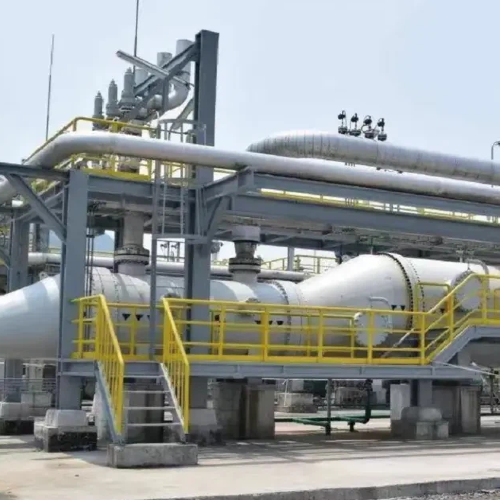
LPG vaporizers are essential in various sectors where gas is needed for heating, cooking, energy generation, or industrial processes. Some of the key applications include:
In industries such as oil refining, petrochemical manufacturing, and chemical production, LPG vaporizers ensure that liquid LPG is vaporized into gas form. The gas is then used in burners, furnaces, or heating systems to power equipment, processes, and machinery.
In homes and businesses that use LPG for cooking, heating, or hot water systems, vaporizers ensure that the liquid LPG in tanks is efficiently vaporized for use in stoves, heaters, or boilers.
LPG vaporizers are also used in power generation, where LPG is used as a fuel for turbines and generators. These vaporizers ensure that the liquid LPG is transformed into gas at the right rate for combustion in engines or turbines.
LPG vaporizers offer a variety of benefits for users in different industries:
LPG vaporizers ensure efficient conversion of liquid LPG into gas, with minimal wastage. This efficiency is crucial for maintaining optimal fuel supply, especially in industrial settings.
LPG vaporizers provide a continuous supply of gas, ensuring that heating, cooking, and industrial processes can operate without interruptions due to fuel supply issues.
LPG vaporizers can be selected based on specific needs, allowing for customization of gas supply systems. They come in different sizes and capacities to meet the requirements of both small-scale and large-scale operations.
With built-in safety mechanisms such as pressure relief valves, automatic shut-off switches, and temperature sensors, LPG vaporizers provide safe operation, ensuring that the vaporization process is managed effectively.
Choosing the correct LPG vaporizer is critical for ensuring optimal performance and safety. Key considerations include:
It’s important to choose a vaporizer with the appropriate capacity to meet your flow rate requirements. Large industrial operations may need a high-capacity vaporizer, while smaller commercial or residential applications require less power.
The local climate and environmental factors can influence the choice of vaporizer. For instance, in colder climates, a steam or electric vaporizer may be more effective than an ambient air vaporizer.
The specific needs of your application will dictate the best choice of vaporizer. For example, if precise temperature control is necessary, an electric vaporizer may be ideal.
Regular maintenance of an LPG vaporizer ensures it functions properly and lasts longer. Here are some essential maintenance and safety tips:
Check for leaks: Ensure that the system is not leaking LPG, which could lead to safety hazards.
Clean components: Dust and dirt can clog the vaporizer's components, reducing efficiency. Regular cleaning ensures the vaporizer runs smoothly.
Monitor temperature: Consistent temperature is crucial for safe operation. Ensure that the vaporizer’s temperature stays within the optimal range.
Install vaporizers in well-ventilated areas to prevent the buildup of gas.
Always check that the safety features, like pressure relief valves, are functional.
Regularly inspect seals, heating elements, and other components for wear and tear.
LPG vaporizers play a crucial role in converting liquid LPG into a usable gas for a variety of applications. They ensure an efficient, safe, and continuous gas supply for industries, households, and businesses alike. By selecting the right vaporizer and maintaining it properly, users can ensure optimal performance and long-term safety of their systems.
At Wuxi Triumph Gases Equipment Co., Ltd., we specialize in providing high-quality LPG vaporizers designed to meet the specific needs of our clients. Whether you're looking for a vaporizer for industrial use or for residential applications, our team is dedicated to helping you choose the perfect solution. Our products are designed for maximum efficiency and safety, ensuring that your LPG vaporization process runs smoothly.
If you're interested in learning more about our range of vaporizers or would like assistance in selecting the right equipment, feel free to get in touch with us. Our experts are ready to guide you in making the best choice for your needs. Let us help you optimize your gas supply systems for years of reliable service.
The purpose of an LPG vaporizer is to convert liquid LPG into gas so it can be used safely and efficiently for various applications, such as heating, cooking, and industrial processes.
An LPG vaporizer works by applying heat to liquid LPG, which causes it to vaporize and turn into gas. The vaporized gas is then distributed for use.
The main types of LPG vaporizers are ambient air vaporizers, steam vaporizers, electric vaporizers, and water bath vaporizers.
Key factors include gas flow rate, environmental conditions, and application requirements.
Yes, LPG vaporizers are safe to use when installed and maintained properly. Ensure the vaporizer has the necessary safety features and is regularly checked for leaks and malfunctions.


